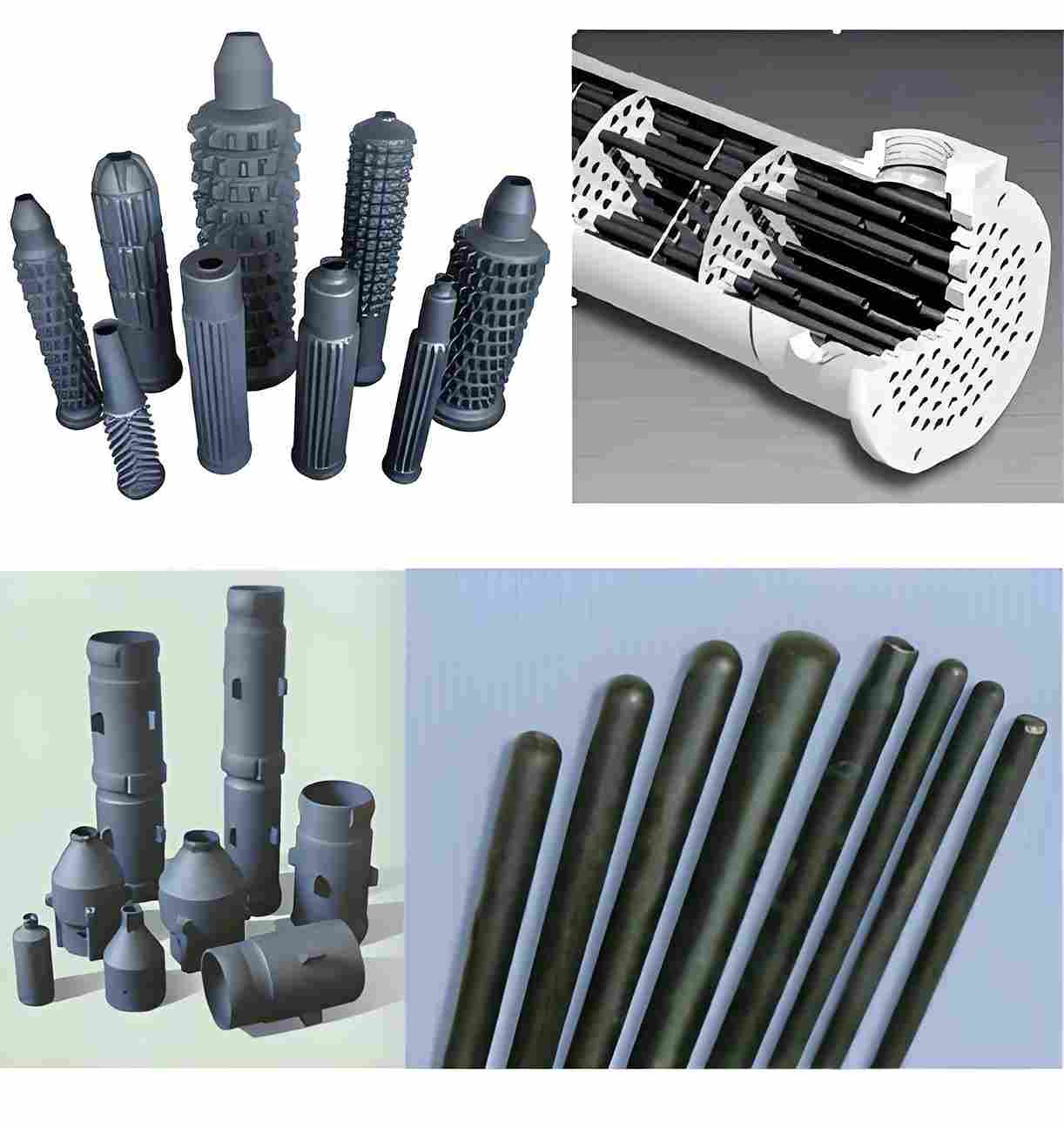
Many high-temperature and corrosive applications cannot be solved with catalog parts. You end up needing a custom silicon carbide component: a special tube with non-standard ends, a seal ring with unusual geometry, a shaped plate, or a complex wear block. The challenge is turning that idea into a part that is manufacturable, repeatable, and reliable in service.
This guide explains how custom silicon carbide (SiC) parts move from concept to production, and what engineers and buyers should focus on at each step.
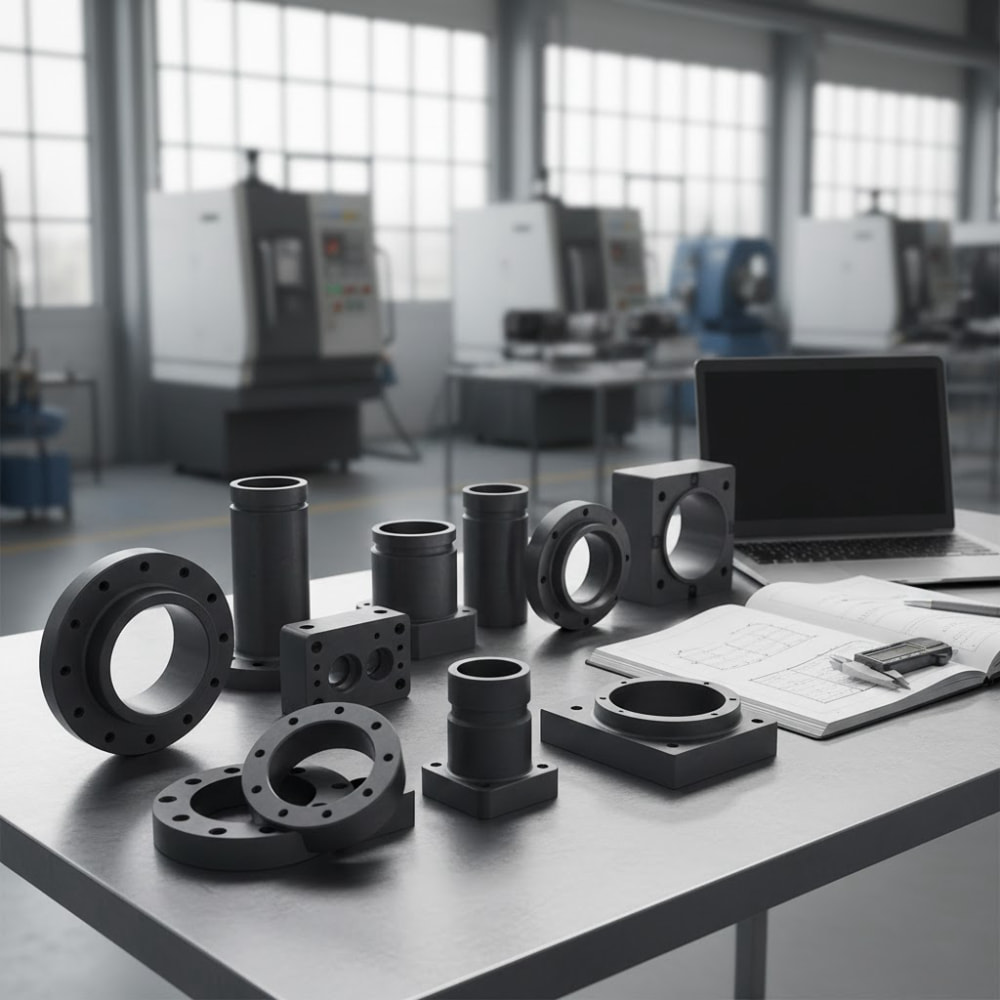
When does it make sense to go custom?
Custom SiC components are worth the effort when:
- Standard parts keep failing under your wear, temperature, or corrosion conditions.
- Geometry is unique to your equipment (special flanges, slots, coolant channels, complex sealing interfaces).
- You want to integrate multiple functions into a single ceramic component (support + wear surface + flow control).
- Downtime is expensive, and a better-designed part can cut failures and maintenance time significantly.
In some cases, a combination of standard products (for example, silicon carbide tubes + separate metal adapters) may still be enough. When that is no longer true, custom SiC design becomes a realistic next step.
Step one: define the problem, not just the drawing
The fastest way to derail a custom SiC project is to send a metal-style drawing with no context and ask for a quote. Before that, clarify:
- Function: seal, support, liner, tube, nozzle, plate, crucible, or multi-function part.
- Environment: temperature range, thermal cycling, pressure, media (gas, liquid, slurry), chemistry (pH, chlorides, oxidants, etc.).
- Load: static load, rotating load, impact risk, bending span, and mounting method.
- Failure history: how current parts fail (wear, cracking, leaks, distortion, corrosion).
- Lifetime goals: target hours or cycles between planned replacements.
Sending this information along with your sketch or initial drawing lets the SiC manufacturer propose the right grade and a realistic geometry from the start.
Selecting the right SiC material system
For custom parts, material choice is just as important as geometry. Typical options include:
- Pressureless sintered SiC (SSiC) – high density, very low porosity, excellent corrosion resistance. Best for mechanical seals, sleeves, and precision parts that see aggressive fluids.
- Reaction-bonded SiC (RBSiC / SiSiC) – good for larger and more complex shapes such as tubes, beams, burner components, and structural plates.
- Recrystallized SiC (RSIC) – used for some extreme-temperature furnace components where thermal shock resistance and gas permeability behaviour are key.
For example:
- A custom furnace tube with special ends will often use RBSiC.
- A custom mechanical seal ring with tight tolerances will typically use SSiC.
- A shaped kiln support plate that cycles frequently may use RBSiC or RSIC depending on the firing curve.
Design for ceramics, not for metal
Copying a metal design 1:1 into ceramic is one of the quickest routes to failure. Designing with silicon carbide means respecting its high strength in compression and brittleness in tension.
Key geometry rules
- Use generous fillets and radii instead of sharp internal corners.
- Avoid thin, long, unsupported sections that invite bending and handling damage.
- Minimize undercuts and blind features that are difficult to form or grind.
- Build in sufficient wall thickness for tubes and rings so they can handle both operating and handling loads.
Mounting and support rules
- Allow for thermal expansion differences between SiC and metal components.
- Avoid fully rigid clamping that locks the ceramic in tension when heated.
- Use distributed contact surfaces instead of point contacts to reduce stress peaks.
Tolerances and surfaces
- Reserve tight tolerances and fine finishes for critical interfaces (seal faces, bearing fits, locating surfaces).
- Use looser tolerances on non-critical areas to reduce cost and lead time.
From drawing to prototype
Once the concept is defined and the design adjusted for ceramics, the next stage is prototyping.
What a good prototype phase looks like
- DFM review: the manufacturer reviews your drawing and suggests any last changes to improve yield and reliability.
- Tooling or forming setup: molds or forming routes are validated for your geometry.
- First article production: a limited batch is produced to confirm process capability.
- Full inspection: critical dimensions, flatness, run-out, and surface finishes are checked and documented.
For functional parts like custom plates, tubes, or crucibles, some customers also request pressure tests, leak tests, or basic thermal cycling during this phase to de-risk field trials.
Testing in real operating conditions
Lab data is useful, but ultimately the part must survive in your equipment. A structured field test should include:
- Clear success criteria: minimum service life, allowed wear, acceptable deformation, and leakage limits.
- Documented installation conditions: mounting, torque on fasteners, start-up procedures, and any alignment checks.
- Monitoring: regular visual checks and measurements during the trial period.
- Post-mortem inspection: if a prototype fails early, return it for fracture analysis and design/process adjustments.
For example, if you are testing a custom SiC liner or plate together with standard silicon carbide plates, comparing wear patterns can help refine both material grade and geometry.
Scaling from prototype to stable production
Once the prototype is proven in service, the focus shifts to making sure every batch behaves like the successful one. This involves:
- Locking down process parameters: forming pressure, sintering curves, and grinding settings.
- Defining inspection plans: which dimensions and properties are checked 100% and which are sampled by batch.
- Documenting acceptance criteria: dimensional tolerances, visual standards, density and porosity ranges, and any special tests.
- Establishing part numbers and revision control: so design changes are tracked and traceable.
This is where a capable SiC supplier makes the difference between a “lucky” prototype and a repeatable production part.
Working effectively with your SiC supplier
Custom silicon carbide projects work best when the supplier is treated as an engineering partner, not just a vendor.
- Share real process data: not just nominal temperatures and pressures, but cycling, upset conditions, and failure modes.
- Be clear on priorities: is the top priority lifetime, lead time, unit cost, or very tight tolerances?
- Ask for design feedback: let ceramic engineers review your CAD for manufacturability and risk points.
- Define communication rules: how changes are approved, how non-conformities are reported, and how urgent issues are handled.
Mini case example: converting a metal part to custom SiC
Consider a chemical plant using a metallic wear sleeve that fails every few months due to combined corrosion and abrasion. The team decides to move to a custom silicon carbide sleeve.
- They share the current drawing, operating media, temperature, and failure photos with the SiC supplier.
- The supplier proposes SSiC with adjusted wall thickness and added fillets at transitions.
- Prototypes are produced, fully inspected, and tested in one pump under controlled conditions.
- The custom SiC sleeves last more than three times longer than the metal version, with minimal dimensional change.
- The design is frozen, inspection plans are defined, and the part moves into regular production with documented batch data.
The net result: fewer shutdowns, lower maintenance time, and more predictable performance for a part that is only one element in the whole pump, but critical to its reliability.
FAQ – Custom silicon carbide parts
Q1: How much design detail do I need before contacting a supplier?
A: A basic sketch with key dimensions, plus operating conditions and failure history, is enough to start. You do not need a perfect 3D model on day one; in fact, getting feedback before you lock the design can save time and cost.
Q2: How long does it usually take to go from concept to first prototypes?
A: It depends on complexity and tooling. Simple custom rings or plates can often reach prototype stage in a few weeks, while large or highly complex parts that require special tooling can take longer. Good information and quick design decisions are the main time-savers.
Q3: Are custom SiC parts always more expensive than standard parts?
A: Unit price is higher than catalog items, but total cost per operating hour is often lower if the custom design significantly extends life or reduces failures. For critical points in the system, custom SiC can be the most economical choice.
Q4: Can I reuse my metal part drawing without changes?
A: Usually not. Ceramics and metals behave very differently. Sharp corners, thin sections, and clamping methods that are safe for metals can cause problems in SiC. Always allow the supplier to adapt the design for ceramic behaviour.
Q5: How many prototypes should I plan for?
A: Plan for at least one iteration, sometimes two. The first prototype validates feasibility; the second locks in refinements from field feedback. Complex or highly stressed parts may need more iteration, but a structured process keeps this under control.