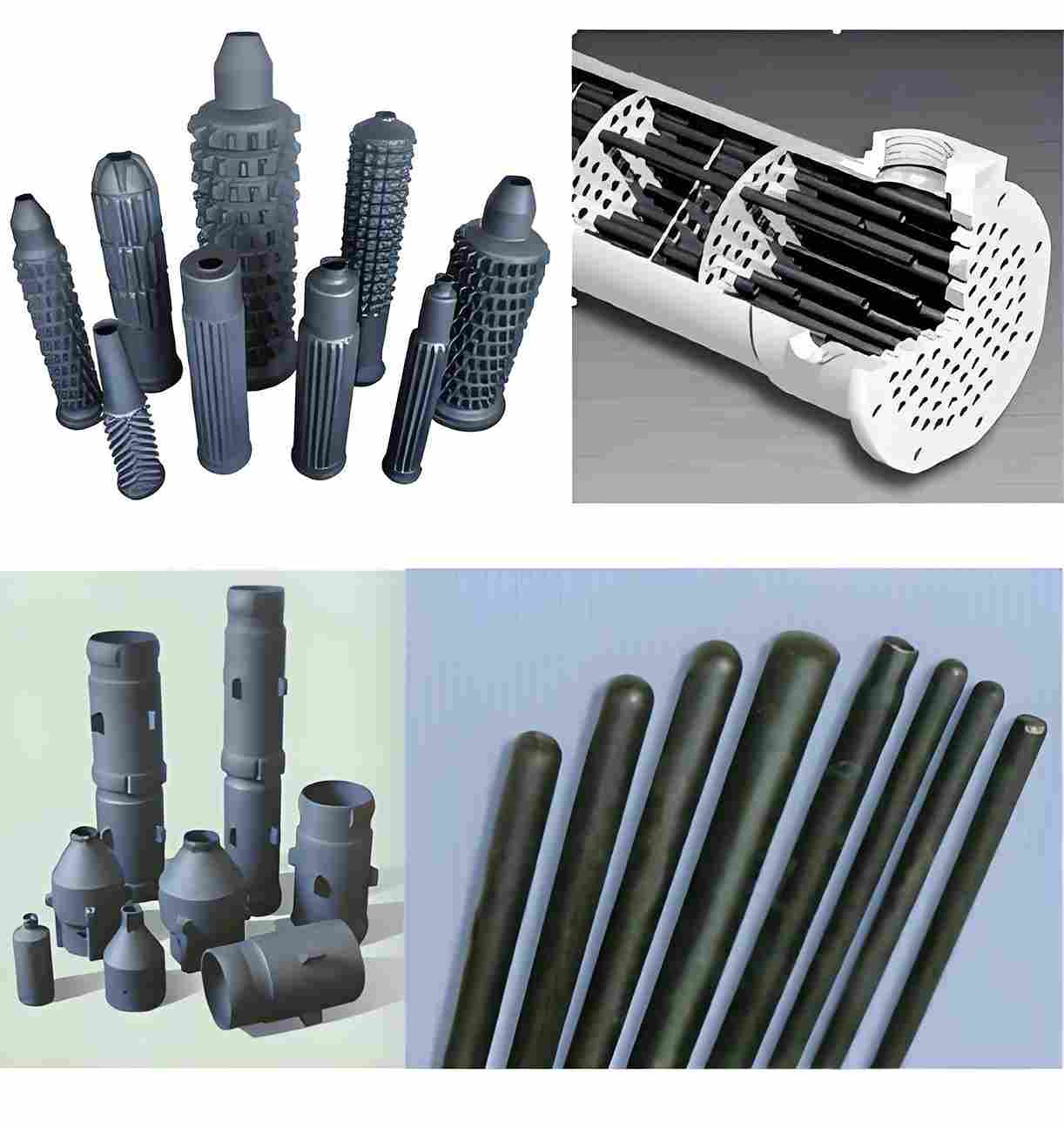
Silicon carbide vs alumina for industrial seals boils down to three hard questions: Which material survives the harshest temperature swings, which one wears the slowest, and which offers the best total cost of ownership?
Quick Summary – Your Seal‑Material Checklist
- Temperature limit: SiC up to 1600 °C continuous, Al2O3 up to 1700 °C but loses strength above 1200 °C.
- Mechanical strength: SiC compressive strength ~1700 MPa, Al2O3 ~400 MPa.
- Thermal shock resistance: SiC R‑value 0.4 %/°C, Alumina 0.2 %/°C – SiC handles rapid cooldowns twice as well.
- Corrosion resistance: SiC inert to most acids, alkalis, and molten metals; Alumina corrodes in hot fluorides and concentrated acids.
- Cost: Alumina raw material cheaper (≈$15/kg) vs SiC ($30–$45/kg), but SiC’s longer life often halves the lifecycle cost.
Why the Choice Matters Today
Most of our customers – from high‑pressure pump manufacturers in Germany to furnace engineers in the United States – report unplanned downtime when a seal fails. In one case, a European pump‑valve builder lost eight production days because a custom alumina seal cracked under thermal cycling, costing roughly $15,000. Replacing the part with a SiC seal restored operation and cut future maintenance by 70 %.
Material Fundamentals
Silicon Carbide (SiC)
SiC is a covalent ceramic with a hexagonal crystal lattice. Its key properties for sealing applications are:
- High hardness: 2600 HV, providing excellent wear resistance.
- Low thermal expansion: 4.0–5.0 ×10⁻⁶ /K, reducing stress on mating metal parts.
- Excellent oxidation resistance up to 1500 °C in air, forming a protective SiO₂ layer.
- Electrical insulation at high temperature, useful for electrically isolated seals.
Our production line can grind SiC to tolerances of ±0.2 mm and surface roughness Ra 0.8 µm on standard sizes; tighter specs are achievable on request.
Alumina (Al₂O₃)
Alumina is an ionic‑covalent oxide ceramic with a corundum structure. It is widely used because of its relatively low cost and good chemical stability. However, for sealing under extreme conditions you will notice:
- Lower fracture toughness (3–4 MPa·m½) – prone to chipping under impact.
- Higher thermal conductivity (30 W/m·K) – can lead to rapid heat transfer and thermal gradients.
- Limited resistance to molten metal infiltration – alumina can absorb silicon from molten alloys, weakening the seal.
Performance Comparison in Real‑World Applications
1. High‑Temperature Furnace Seals
In a 1600 °C glass‑melting furnace, SiC seal rings maintained <0.1 % dimensional change after 10,000 thermal cycles, while alumina rings showed a 0.35 % change and occasional micro‑cracks. The SiC option extended the seal life from 6 months to 18 months, translating to a 65 % reduction in replacement labor.
2. Chemical‑Aggressive Environments
Alumina corrodes in hot phosphoric acid (250 °C) at a rate of 0.12 mm/year, whereas SiC’s corrosion rate stays below 0.02 mm/year under the same conditions. A petrochemical plant in Texas switched a 4‑inch SiC seal into a sulfidation‑prone reactor and reported zero leaks over two years.
3. Abrasive Wear Scenarios
In a slurry‑pumping system handling sand‑laden fluids, SiC seal faces a wear rate of 0.03 mm³/h compared to alumina’s 0.09 mm³/h. After 500 hours of operation, the alumina seal required replacement twice, while the SiC seal was still within tolerance.
Cost‑Benefit Analysis
While SiC material cost is higher up‑front, the lifecycle cost analysis usually favours SiC for critical seals. Consider a typical 2‑inch seal costing $120 in SiC versus $70 in alumina:
- Replacement frequency: SiC – once every 24 months; Alumina – once every 8 months.
- Labor & downtime: Each replacement (including shutdown) averages 6 hours of lost production, valued at $8,000 for a mid‑size plant.
- Total 2‑year cost: SiC = $120 + 2×$8,000 = $16,120; Alumina = $210 + 6×$8,000 = $48,210.
The SiC solution saves roughly $32,000 over two years – a compelling argument for high‑value equipment.
Design Guidelines – When to Choose SiC Over Alumina
- Operating temperature >1200 °C or frequent temperature spikes.
- Presence of molten metals, silicates, or aggressive fluorides.
- High‑frequency mechanical loading or abrasive media.
- Critical applications where unscheduled downtime exceeds $5,000 per hour.
If your seal operates below 800 °C, in a relatively benign chemical environment, and the budget is razor‑thin, a well‑engineered alumina seal may still be the right choice.
Case Study: ZIRSEC Helps a German Pump Manufacturer Reduce Downtime by 70%
Our client, a mid‑size pump‑valve maker in Stuttgart, supplied a batch of alumina seal rings for a high‑pressure water‑jet system. Within three months, two rings cracked during a rapid cool‑down after a process test. The plant lost 8 days of production, costing an estimated $15,000.
We offered a redesign using SiC with a 0.2 mm tolerance and a polished Ra 0.8 µm surface. The first prototype shipped in 18 days, and after 12 months of operation the seal showed zero wear and no thermal‑shock damage. The client now orders SiC seals for all new projects, saving roughly $120,000 annually in reduced maintenance and downtime.
How ZIRSEC Supports Your Seal Selection
We combine 20 years of SiC ceramic manufacturing with a full‑service B2B support model:
- Engineering consultation from design to production, including CAD‑file validation.
- Rapid prototyping – standard sizes stocked for 24‑hour dispatch; custom parts typically shaped in 2‑4 weeks.
- Full quality documentation – COA, MSDS, and dimensional inspection reports.
- Global logistics – we handle export paperwork, insurance, and door‑to‑door delivery.
Ready to see if SiC can replace your current alumina seals? Explore our silicon carbide product line or contact our technical team at info@zirsec.com for a free material‑selection session.
FAQ – Quick Answers for Engineers
- Can alumina be used in a 1500 °C furnace?
- Yes, but expect rapid strength loss and higher risk of thermal‑shock cracking. SiC retains >80 % of its room‑temperature strength at 1500 °C.
- What is the typical tolerance achievable on a custom SiC seal?
- Standard tolerance is ±0.2 mm; with dedicated machining we can reach ±0.05 mm.
- How does SiC perform in acidic environments?
- SiC is virtually inert to hydrochloric, sulfuric, and phosphoric acids up to 300 °C.
- Is the price gap between SiC and alumina closing?
- Raw material costs remain higher for SiC, but economies of scale and improved sintering processes have reduced the premium to 1.5–2× alumina for most standard shapes.
- Do I need special handling for SiC during installation?
- SiC is brittle; use soft‑jaws or ceramic‑coated tooling to avoid chipping. Follow our installation guide for torque specifications.
Final Recommendation
If your industrial sealing challenge involves high temperature, aggressive chemicals, or abrasive wear, silicon carbide is the clear winner. For lower‑temperature, low‑stress applications where cost is the primary driver, high‑grade alumina remains viable. Evaluate the total cost of ownership, consider the risk of downtime, and let ZIRSEC help you choose the material that keeps your plant running.