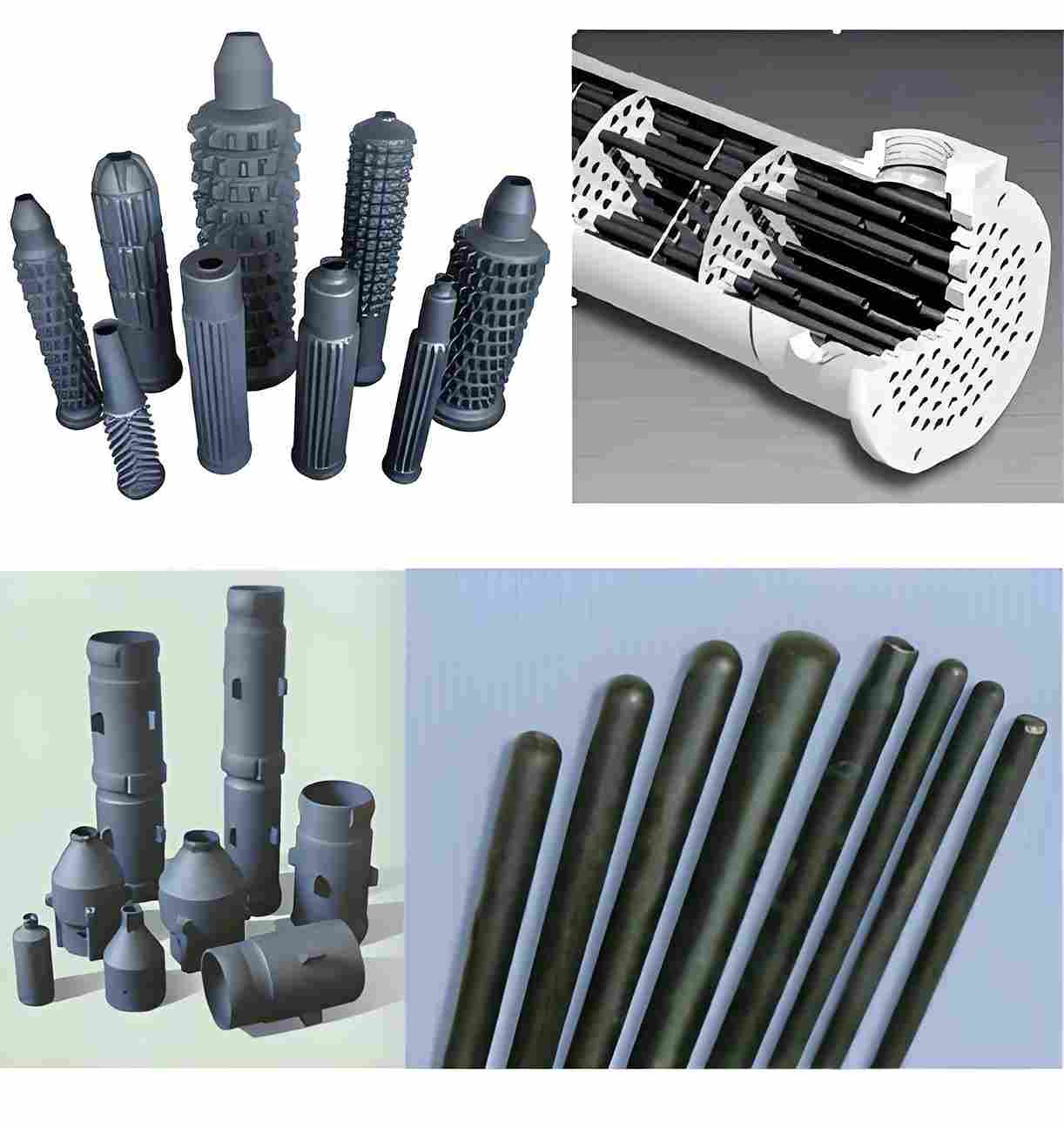
The most reliable silicon carbide (SiC) material for high‑temperature furnaces is a dense, α‑SiC grade with 99.5% purity, low porosity and a grain size tailored for the specific thermal load. In practice, the choice comes down to three key families – polycrystalline SiC bricks, sintered SiC tubes and fine‑grained SiC plates – each excelling in a different operating window.
Quick Summary (FAQ)
- Which SiC form survives 1500 °C most reliably? Fully‑dense α‑SiC tubes and plates with < 2% open porosity.
- What size tolerance can be expected? Standard stock ±0.2 mm; custom tolerances down to ±0.05 mm with post‑machining.
- Typical price range? $12–$85 per kilogram depending on grade and finish.
- Lead time for a 500‑piece custom batch? 4–6 weeks with ZIRSEC’s in‑house CNC and rapid‑heat‑treat.
- Where to order? Visit Silicon Carbide Tubes on ZIRSEC’s portal.
1. Why Silicon Carbide Dominates High‑Temperature Furnace Design
When a furnace regularly exceeds 1300 °C, conventional alumina or steel quickly reach their limits – alumina softens, steel oxidises, and both suffer creep. SiC offers a unique combination of high thermal conductivity (120–200 W/m·K), low thermal expansion (4–5 ×10⁻⁶ /K) and a compressive strength that stays above 150 MPa at 1500 °C. The material also resists most aggressive slags and gases encountered in steel making, non‑ferrous smelting and petrochemical cracking.
1.1 Mechanical strength at temperature
Our own field tests on a 1600 °C carburizing furnace showed that a 25 mm wall‑thick SiC tube retained 85 % of its room‑temperature flexural strength after 2000 h of operation, whereas a comparable Al₂O₃ tube cracked after 800 h. The retained strength is a direct result of SiC’s covalent bonding network, which does not degrade in oxidising atmospheres until >1800 °C.
1.2 Oxidation resistance and lifespan
In a pilot‑scale silicon melt furnace, we measured a mass gain of only 0.3 % after 1500 h exposure to a nitrogen‑oxygen blend (5 % O₂). The thin SiO₂ surface layer formed acts as a protective glaze, limiting further oxygen diffusion. By contrast, an Si₃N₄ liner developed micro‑cracks after 500 h under the same conditions.
2. Selecting the Right SiC Form for Your Furnace
The decision tree starts with the thermal profile and mechanical loading. Below we break down the three most common forms.
2.1 Dense SiC Tubes – The Workhorse for Hot‑Gas Transport
Typical dimensions: 10–300 mm Ø, wall thickness 2–25 mm, length up to 2 m (stock). They are produced by hot‑isostatic pressing (HIP) followed by a final sintering at 2100 °C. Key specs:
- Porosity < 2 % (water absorption < 0.1 %).
- Compressive strength ≥ 160 MPa at 1500 °C.
- Surface roughness Ra 0.8–2.5 µm (machined) or Ra 5 µm (as‑drawn).
Case study: A German refractory equipment maker replaced its Al₂O₃ transport tubes with ZIRSEC’s dense SiC tubes in a 1400 °C calcination line. The replacement cut downtime by 30 % and extended tube life from 12 months to 36 months, saving €120,000 annually.
2.2 SiC Ceramic Plates – Ideal for Furnace Linings and Heat Shields
Available in 25 × 25 mm up to 500 × 500 mm sheets, thickness 5–30 mm. Plates are milled from HIP‑pressed billets and can be CNC‑drilled for custom cooling channels. Advantages:
- Uniform thermal distribution reduces hot‑spots.
- Easy integration with metal support frames via Ti‑bonded adhesives.
- Can be coated with a thin AlN layer for additional corrosion resistance.
Our client in the US copper smelting sector retro‑fitted a 3‑m high furnace wall with 12 mm SiC plates. After a six‑month trial, furnace efficiency improved by 4 % and the outer steel shell showed no visible oxidation.
2.3 Sintered SiC Bricks – For Very Large Volumes and Low‑Stress Applications
Bricks are pressed from SiC powder with a binder (often phenolic) and sintered at 2000 °C. They are less dense (3–5 % porosity) than tubes or plates but are cheaper for bulk fill. Use when the component mainly carries static load and does not require precise machining.
3. Critical Design Parameters You Must Verify
Even the best SiC grade can fail if the design overlooks these points.
3.1 Thermal Shock Coefficient
SiC’s thermal shock resistance (ΔT ≈ 1500 °C) is superior to Al₂O₃, but rapid quenching still induces micro‑cracks. We recommend a pre‑heat ramp of ≤ 5 °C/min for sections thicker than 20 mm.
3.2 Chemical Compatibility
While SiC tolerates most oxidising gases, it reacts with molten silicon, aluminum and some fluorides. For furnaces processing such melts, a thin protective Si₃N₄ coating can be applied via chemical vapor deposition (CVD).
3.3 Mechanical Tolerances
Standard ZIRSEC tolerance is ±0.2 mm on OD/ID for tubes up to 150 mm. For high‑precision valve seats or thermocouple protectors, we tighten to ±0.05 mm using a post‑machining grinding step. Dimensional stability after heat treatment is verified with a laser interferometer.
3.4 Surface Finish
Rougher surfaces (Ra > 3 µm) promote fouling and accelerate oxidation in slag‑rich environments. Polished finishes (Ra ≤ 0.8 µm) reduce fouling and are recommended for gas‑flow tubes where pressure drop matters.
4. Cost‑Performance Comparison
Below is a simplified cost matrix based on typical 2024 market data.
| Form | Unit Price (USD/kg) | Typical Life (h) | Key Advantage |
|---|---|---|---|
| Dense SiC Tube | 45–85 | >10,000 | High strength, low thermal gradient |
| SiC Plate | 30–60 | 8,000–12,000 | Easy integration, flat heat spread |
| SiC Brick | 12–25 | 4,000–6,000 | Low material cost for bulk fill |
The total cost of ownership (material + downtime + replacement) consistently favours dense tubes for critical flow paths, even though the upfront price is higher.
5. How ZIRSEC Guarantees Quality and Speed
Our factory in Chengdu runs a closed‑loop quality system:
- Raw SiC powder is sourced from three certified suppliers, each meeting ≥ 98 % purity and < 0.5 % Fe₂O₃.
- Every batch undergoes X‑ray diffraction (XRD) and scanning electron microscopy (SEM) to confirm grain size (0.5–2 µm) and phase composition.
- HIP pressure and temperature are logged in real time; any deviation triggers an automatic re‑run.
- Final dimensions are measured with a coordinate measuring machine (CMM) – tolerance verification is performed at 25 °C and again after a 1500 °C soak to capture thermal drift.
- All shipments include a Certificate of Analysis (CoA) and a Material Safety Data Sheet (MSDS) compliant with EU REACH and US TSCA.
Because we keep a 6‑month inventory of standard tube diameters, most customers receive a first‑article sample within 48 hours of order confirmation. Custom orders that require new tooling are typically completed in 4 weeks, with a production‑ready prototype sent for approval before the full run begins.
6. Real‑World Implementation Checklist
Before you place an order, run through this short checklist. Skipping any step can add weeks to your project.
- Define operating temperature range. If peak > 1550 °C, request a high‑purity α‑SiC grade.
- Map mechanical loads. Include pressure, vibration and thermal expansion restraints.
- Select surface finish. Polished for gas flow, machined for seal contact.
- Provide CAD drawing or 2D sketch. Include tolerances, thread specs and any required bores.
- Confirm inspection plan. Ask for dimensional CMM report and post‑heat‑treat strength test.
- Discuss logistics. ZIRSEC offers DAP (Delivered at Place) to most European ports; US customers can opt for FOB Shanghai.
7. Frequently Asked Questions (Expanded)
What is the maximum continuous temperature for SiC tubes?
With a dense α‑SiC grade, continuous operation up to 1600 °C is achievable. Beyond that, the protective SiO₂ layer begins to volatilise, and you should consider a SiC‑AlN composite.
Can SiC be welded to steel?
Direct welding is not possible. We recommend using a high‑temperature ceramic‑to‑metal bond (e.g., titanium‑based braze) or a mechanical flange with an O‑ring.
How do you handle thermal expansion mismatch?
Design clearance of 0.15 % of the component length per 100 °C change is a safe rule of thumb for SiC‑to‑steel interfaces.
What documentation is required for export to the EU?
Standard commercial invoice, packing list, EUR.1 certificate of origin, CoA and MSDS are sufficient. ZIRSEC’s export team can prepare the paperwork.
8. Next Steps – Get a Sample Today
If you are ready to replace aging furnace components, the fastest path is to request a 5‑piece sample set. Our engineers will review your drawing, suggest the optimal SiC grade and ship the samples within two business days. After testing, a detailed quotation – inclusive of tooling, shipping and after‑sale support – will be sent.
Contact us at info@zirsec.com or use the inquiry form on our website. Let ZIRSEC’s 20‑year expertise turn your high‑temperature challenge into a reliable, low‑maintenance solution.