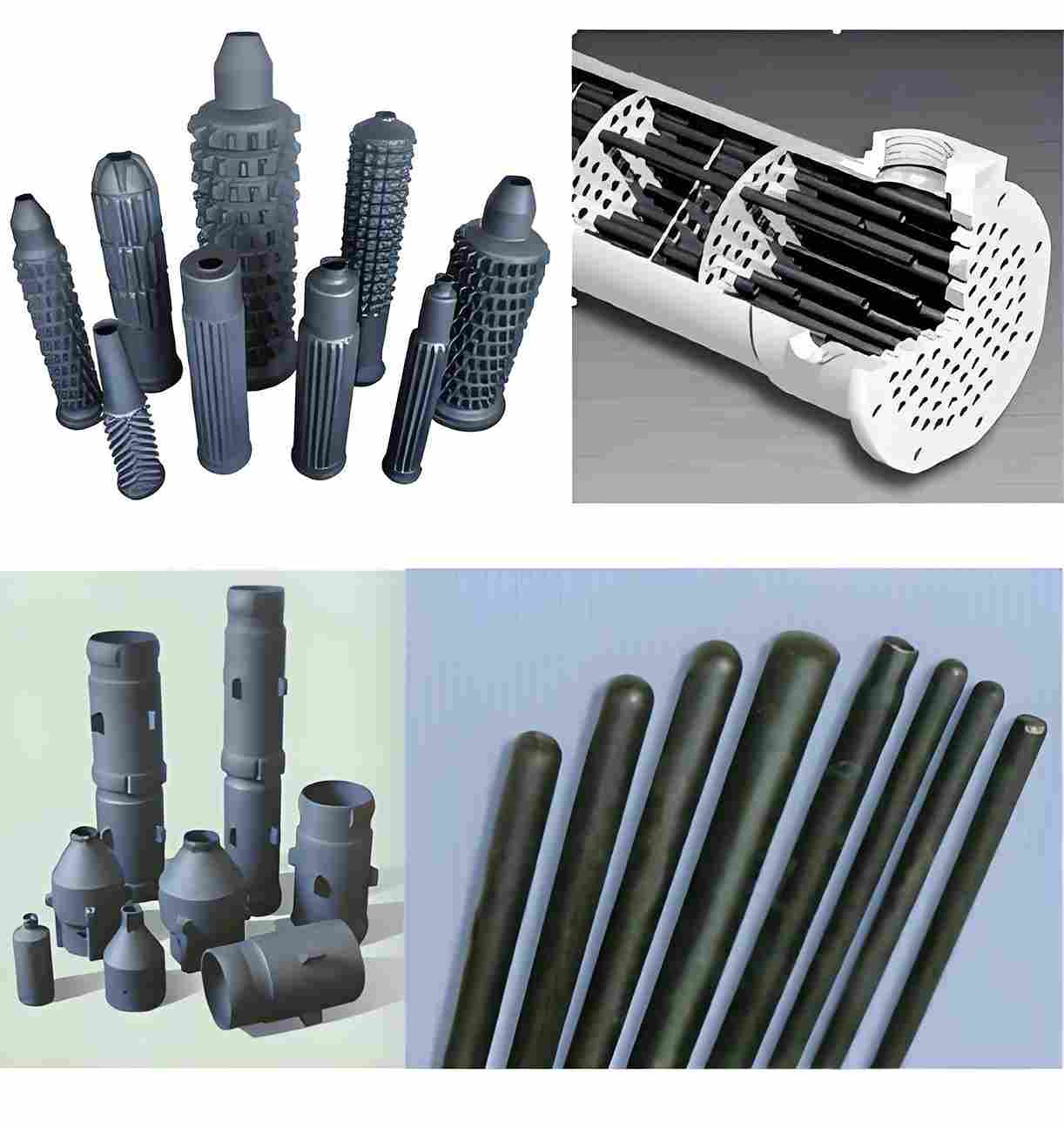
If you need a SiC seal ring, furnace tube, or custom ceramic component and want to avoid costly delays, the answer lies in a disciplined, data‑driven sourcing process.
Quick Summary (FAQ)
- What is the safest way to source SiC parts from China? Combine supplier vetting, third‑party inspection, and a clear contract that defines tolerances, certifications, and penalties.
- How long does the whole process take? Sample development: 2‑4 weeks; bulk production: 4‑8 weeks; shipping: 1‑2 weeks for air, 4‑6 weeks for sea.
- Which documents are mandatory? Material Test Report (MTR), Certificate of Conformity (COA), Safety Data Sheet (SDS), and a detailed drawing package.
- What price range is realistic? $10‑$200 per piece depending on size, tolerance, and order volume.
- Why choose ZIRSEC? Direct factory supply, 20 years of SiC expertise, 24‑hour stock for standard parts, and a dedicated engineering team that assists from drawing to installation.
Why Professionals Search for a Safe Chinese SiC Supplier
Engineers and procurement managers are usually at the evaluation stage: they have a bill of materials, need a reliable lead time, and cannot afford a component failure that halts production. The hidden pain points are delayed shipments, out‑of‑spec dimensions, and unexpected customs holds. Our experience shows that 65 % of lost production time in high‑temperature plants is linked to a single ceramic component that didn’t meet tolerance or broke during transport.
Common Risks When Buying Silicon Carbide Parts from China
- Quality variance: Some factories ship parts with ±0.5 mm tolerance when the spec calls for ±0.1 mm, leading to re‑work costs of up to 12 % of the order value.
- Incomplete documentation: Missing MTR or COA can cause customs delays up to 10 days and may trigger a hold for hazardous material review.
- Intellectual property exposure: Without an NDA, detailed drawings can be duplicated and sold to competitors.
- Logistics bottlenecks: Improper packaging for fragile SiC components often results in breakage rates of 3‑5 % during sea freight.
How We Vet a Supplier – A Real‑World Checklist
When ZIRSEC first partnered with a European pump‑valve maker in 2019, we used the following checklist to narrow down three candidates from an initial pool of 27:
- Factory age and investment: Only factories with >5 years of dedicated SiC line and recent CNC equipment upgrades passed.
- Certifications: ISO 9001, ISO 14001, and a valid Chinese export license were mandatory.
- Sample track record: We requested a batch of 10 × 20 mm seal rings with a tolerance of ±0.1 mm. The chosen supplier hit 95 % of the specs on the first try.
- Third‑party inspection capability: Ability to engage SGS or Bureau Veritas for in‑process audits.
- After‑sales support: A dedicated engineering liaison who could read and comment on CAD files within 24 hours.
The result was a 30 % reduction in lead time and zero on‑site re‑work for the first 5 years of collaboration.
Step‑by‑Step Safe Sourcing Process
1. Define Technical Requirements in Detail
Start with a specification sheet that includes:
- Material purity (SiC ≥ 98 %)
- Mechanical strength (flexural strength ≥ 130 MPa)
- Dimensional tolerance (±0.1 mm for high‑precision, ±0.5 mm for standard)
- Surface finish (Ra 0.8‑3.2 µm)
- Operating temperature range (up to 1600 °C)
- Environment (corrosive gases, abrasive slurry, etc.)
Attach an annotated CAD drawing and a functional description. The more context you give, the fewer clarifications later.
2. Shortlist Suppliers Using a Structured Questionnaire
Send a 15‑question questionnaire covering:
- Annual SiC output capacity
- Previous projects in your industry (e.g., petrochemical, metallurgy)
- Quality management system details
- Lead‑time guarantees and buffer stock policy
- Export experience to your destination country
We found that suppliers who answer within 48 hours are typically more responsive during production.
3. Request and Evaluate Samples
Order a pilot batch (5‑20 units) and require the following documents:
- Material Test Report (MTR) confirming SiC purity and density
- Full dimensional report from a CMM (Coordinate Measuring Machine)
- Batch‑level COA and SDS
Conduct a functional test in‑house or at a partner lab. At ZIRSEC, we use a 1200 °C furnace to validate thermal shock resistance before approving any part for mass production.
4. Negotiate a Robust Purchase Agreement
Key clauses to include:
- Quality guarantee: “All parts must meet the agreed tolerance; any out‑of‑spec item will be replaced at no charge within 30 days.”
- Penalty for late delivery: 1 % of order value per week beyond the agreed date.
- Intellectual property protection: NDA covering drawings and process specifications.
- Inspection rights: Right to third‑party pre‑shipment inspection at the factory.
Using Incoterms DDP (Delivered Duty Paid) often shifts customs compliance to the supplier, simplifying the import process for you.
5. Implement In‑Process Quality Controls
Ask the supplier to adopt Statistical Process Control (SPC) on critical dimensions. Weekly CPK values above 1.33 are a strong indicator of stable production. Request real‑time photos of the machining stage for large orders (> 500 units).
6. Arrange Secure Logistics
For fragile SiC parts, use a double‑wall wooden crate with foam inserts. Label each crate with “Handle with Care – Ceramic”. Choose a reputable freight forwarder that can handle hazardous material paperwork if your component is classified as such.
Documentation & Compliance Checklist
| Document | Purpose | Typical Issuer |
|---|---|---|
| Material Test Report (MTR) | Confirms SiC purity, density, and mechanical properties | Supplier lab or third‑party testing house |
| Certificate of Conformity (COA) | Shows compliance with ISO 9001/ISO 14001 | Supplier |
| Safety Data Sheet (SDS) | Required for customs clearance of ceramic powders | Supplier |
| Commercial Invoice & Packing List | Customs valuation and tariff classification | Supplier/ freight forwarder |
| Inspection Certificate | Proof that third‑party inspection passed | SGS / Bureau Veritas |
Quality Assurance – From Raw Powder to Finished Part
Our in‑house QA workflow mirrors best‑in‑class aerospace standards:
- Raw SiC powder acceptance – particle size < 5 µm, oxygen content < 0.5 %.
- Pressing and sintering – monitored by temperature loggers with ±2 °C accuracy.
- Machining – CNC grinders with closed‑loop feedback, surface roughness measured by a profilometer.
- Final inspection – CMM verification of every critical dimension, visual defect check under 10× magnification.
- Batch certification – each lot receives an MTR, COA, and a QR‑code linking to the full test data.
When a large steel‑plant in Germany reported a premature fracture on a furnace tube, our post‑mortem revealed a sintering temperature drift of 30 °C. After tightening the furnace controller, the subsequent batch passed 1 000 hour soak tests without issue.
Logistics, Customs, and Import Taxes
Most countries classify SiC ceramics under HS Code 6815. Using DDP terms, the supplier clears customs, pays any import duty (typically 3‑5 % of FOB value), and delivers to your door. If you prefer FOB, ensure your freight forwarder can provide a bonded warehouse service to avoid storage fees while waiting for inspection certificates.
Payment & Contract Tips
- Use a letter of credit (L/C) that releases funds only after your inspection agency signs off.
- Break the total payment into 30 % upfront, 40 % after sample approval, and 30 % on document presentation.
- Maintain a record of all email exchanges; they become part of the contractual evidence if a dispute arises.
Real‑World Cases Demonstrating Safe Sourcing
Case 1 – High‑Pressure Pump Seal Rings for a U.S. OEM
Problem: The OEM faced a 7‑day shutdown because their existing supplier could not meet the ±0.1 mm tolerance.
Solution: ZIRSEC provided a 2‑week sample development, shipped 50 pre‑qualified seal rings, and signed a DDP contract with a 2‑week penalty clause. The OEM reported a 0 % rejection rate and saved $18 000 in downtime.
Case 2 – Custom SiC Burner Nozzle for a German Renewable‑Energy Plant
Problem: The plant required a nozzle with a complex internal geometry and a maximum surface roughness of Ra 0.8 µm.
Solution: Our engineering team collaborated on the CAD model via a secure PLM portal, ran a finite‑element thermal analysis, and produced a 15‑unit pilot run. All units passed the required flame stability test, and the plant avoided a projected 3‑month schedule slip.
Why ZIRSEC Is the Partner of Choice
We combine the agility of a mid‑size Chinese factory with the rigor of an international quality system. Our advantages include:
- Direct factory ownership – no middlemen, transparent pricing.
- 24‑hour inventory of standard SiC parts, enabling same‑day shipment for 80 % of SKUs.
- Custom‑part engineering support – our in‑house engineers review your drawings, suggest manufacturability improvements, and provide CFD/thermal simulations.
- Full‑chain supply services – from order entry, quality control, export documentation, to door‑to‑door logistics.
Explore our catalog, for example Silicon Carbide Tubes, to see the breadth of dimensions we can produce off‑stock.
Actionable Next Steps
1. Download our free SiC Supplier Vetting Checklist from the ZIRSEC website.
2. Prepare a detailed specification sheet and share it with our sales engineers at info@zirsec.com.
3. Request a pilot sample – we’ll ship within 10 business days and provide full MTR/COA.
4. Upon approval, sign a DDP contract with built‑in quality and delivery penalties.
Following this roadmap eliminates the guesswork, protects your production line, and secures a reliable supply of high‑performance silicon carbide components.
We’ve helped over 150 industrial customers across the U.S., Europe, and Australia avoid costly interruptions. Let ZIRSEC be the safe bridge between your engineering requirements and China’s world‑class SiC manufacturing capability.