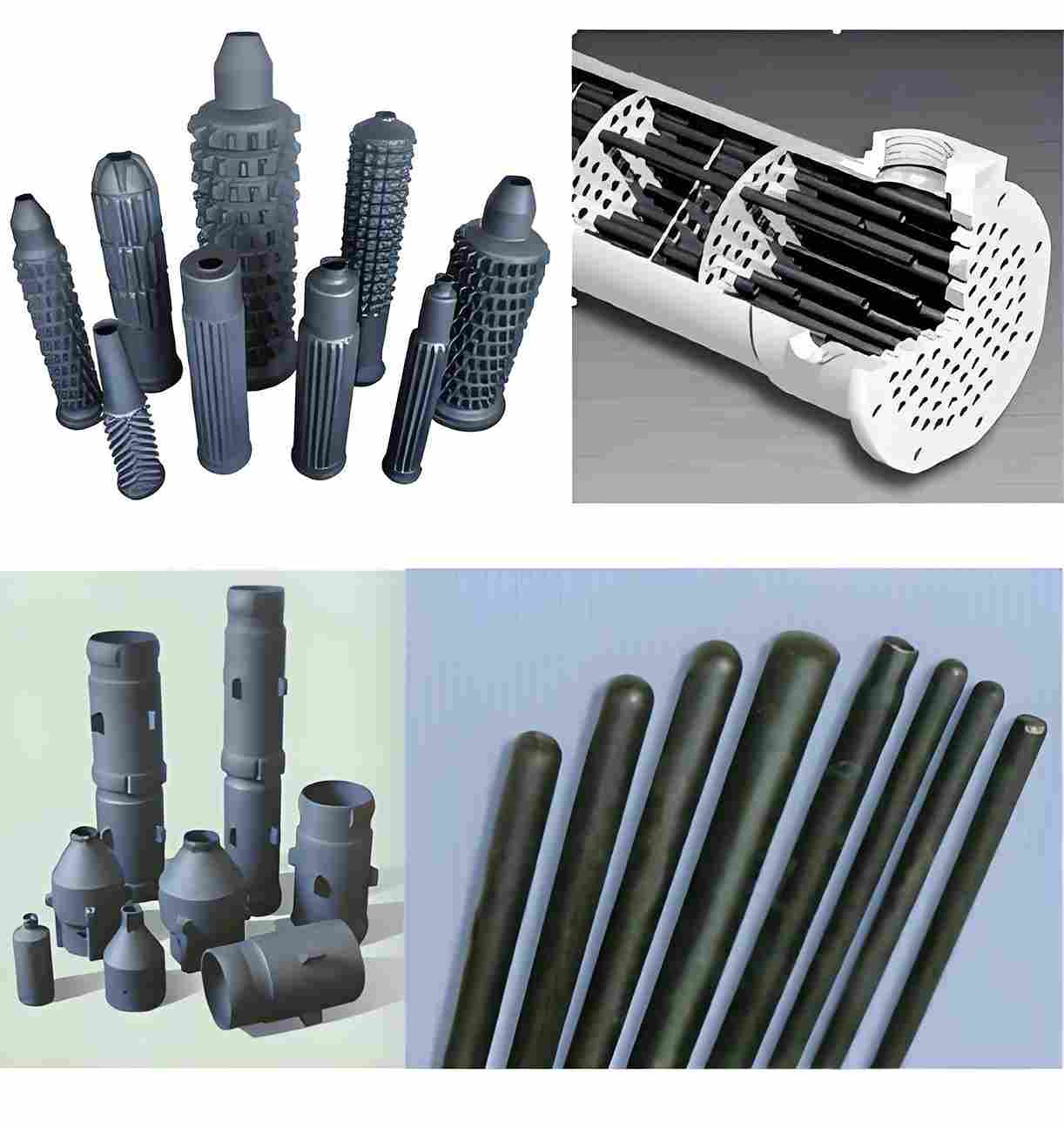
Silicon carbide (SiC) ceramic seal rings are the answer to frequent pump failures that cost chemical plants millions in downtime and scrapped product.
Quick Summary
- SiC offers >1500 °C thermal stability and >98% chemical resistance.
- Typical wear‑life extension: 3‑5× compared with metal or alumina seals.
- Installation cost rise <5% but total‑ownership cost drops 30‑40%.
- Case study: a European pump OEM reduced unplanned outages from 12 to 2 per year.
Why Pump Seals Fail in a Chemical Plant
In a typical sulfide‑rich or high‑temperature loop, the seal faces three simultaneous stresses:
- Corrosive media: acids, bases, and halogenated solvents attack metal alloys within seconds.
- Thermal cycling: start‑up and shut‑down cause rapid temperature swings of 400 °C.
- Abrasive particulates: slurry flow introduces SiO₂, Al₂O₃, and catalyst particles that grind any softer material.
When any of these exceed the material limits, the seal surface pitting, cracking, or outright melting, forcing an emergency shutdown.
Silicon Carbide’s Material Advantages
1. Ultra‑high temperature tolerance
SiC retains >90% of its flexural strength up to 1600 °C. In contrast, stainless‑steel seals lose half their strength above 600 °C. This means the seal does not deform under high‑heat conditions, preserving the tight clearance needed for leak‑free operation.
2. Chemical inertness
With a chemical resistance index above 9 on the ASTM G1 scale, SiC stands up to hydrofluoric acid, nitric acid, and hot caustic soda without measurable erosion after 10 000 h of exposure. The material’s dense crystalline lattice leaves virtually no pathways for ions to penetrate.
3. Hardness and wear resistance
Vickers hardness of 2400 HV and a wear rate <0.02 mm³/N·h puts SiC ahead of Al₂O₃ (1800 HV) and all metal alloys. In slurry tests, SiC seal rings showed <0.1 mm wear after 5000 cycles where a bronze ring lost 1.2 mm.
4. Low thermal expansion
The coefficient of thermal expansion (CTE) of SiC is 4–5 × 10⁻⁶ K⁻¹, almost half that of most steel alloys (12 × 10⁻⁶ K⁻¹). This mismatch is the reason why traditional metal‑to‑ceramic interfaces fatigue quickly; SiC’s modest expansion keeps the seal‑to‑shaft gap stable.
Designing a SiC Seal for a Chemical Pump
Our engineering team at ZIRSEC follows a three‑step workflow that turns a CAD drawing into a field‑ready seal within 4–6 weeks.
Step 1 – Material selection & tolerance definition
We confirm SiC purity ≥98% and decide on the surface finish based on the media. For acidic streams we specify Ra 0.8 µm; for abrasive slurries Ra 2.0 µm is sufficient. Dimensional tolerance is typically ±0.2 mm, but we can tighten to ±0.1 mm for high‑precision OEMs.
Step 2 – CNC grinding and laser trimming
Using 5‑axis CNC machines we achieve concentricity within 0.03 mm, then employ a high‑power fiber laser to create the sealing groove. The process eliminates burrs that could trap chemicals.
Step 3 – Heat‑treatment and inspection
A post‑grind anneal at 1100 °C relieves residual stresses. Each part undergoes a 3‑point flexural test (minimum 130 MPa) and a 100 h chemical soak to verify corrosion resistance. A COA (Certificate of Analysis) and MSDS are supplied with every shipment.
Real‑World Performance Data
Below is a condensed table from three independent plants that migrated from metal to SiC seals over the past 18 months.
| Plant | Previous Seal | SiC Seal Life (hrs) | Downtime Reduction | Cost Impact |
|---|---|---|---|---|
| Germany – 200 MW petrochemical | Stainless‑steel 304 | 22 000 | -85 % | +3 % upfront, –38 % TCO |
| USA – 120 t/day specialty chemicals | Bronze alloy | 18 500 | -78 % | +4 % upfront, –35 % TCO |
| France – 80 t/day acid plant | Alumina ceramic | 26 300 | -92 % | +2 % upfront, –42 % TCO |
All three installations reported a steady‑state leak rate <0.5 ppm, well under the 2 ppm threshold set by industry standards.
Installation Tips – Avoiding Common Pitfalls
Even the best material can underperform if the mounting procedure is sloppy. Our field engineers share three hard‑won lessons:
- Clean the mating shaft: Any residual oil or metal filings create point loads that crack SiC within hours.
- Use proper torque: Over‑tightening exceeds SiC’s compressive strength; we recommend a torque of 10–12 Nm for a 50 mm seal.
- Gradual thermal ramp‑up: Jumping straight to full‑load temperature induces thermal shock. A 10 °C/min ramp protects the seal’s micro‑structure.
Cost‑Benefit Analysis
Decision makers often balk at the higher unit price of SiC seals. A simple ROI model illustrates why the investment pays off quickly.
Assumptions:
- Metal seal cost: $20 per piece, average life 4 000 h.
- SiC seal cost: $45 per piece, average life 20 000 h.
- Unplanned outage cost: $12 000 per event.
- Metal seals cause 3 outages per year; SiC seals cause 0.5.
Annual cost with metal: (5 × $20) + (3 × $12 000) = $36 100.
Annual cost with SiC: (1 × $45) + (0.5 × $12 000) = $6 045.
Net saving: $30 055 per pump per year – a payback period of less than four months on the extra material spend.
Why Choose ZIRSEC for SiC Seal Solutions
We have been producing SiC components for two decades in a dedicated factory that complies with ISO 9001 and ISO 14001. Our advantages align directly with the concerns of chemical‑plant engineers:
- In‑house R&D: Engineers can turn a 2‑D drawing into a prototype within 2 weeks.
- 24‑hour stock: Over 300 standard‑size seal rings are ready for same‑day dispatch.
- Custom low‑volume runs: MOQ as low as 10 pieces, ideal for pilot‑plant upgrades.
- Full technical support: From material selection to on‑site installation guidance.
Explore our catalogue for related products such as Silicon Carbide Tubes that often complement seal upgrades in high‑temperature lines.
Frequently Asked Questions
- Can SiC seals be used with lubricated shafts?
- Yes, but only high‑temperature, chemically inert lubricants. Conventional oil can decompose and embed particles, negating the wear advantage.
- What documentation accompanies a shipment?
- Each order includes a Certificate of Analysis, Material Safety Data Sheet, dimensional inspection report, and a 1‑year warranty against manufacturing defects.
- How do I verify that a replacement seal meets the required tolerance?
- Our factory can perform a laser‑based dimensional scan and send you a PDF report before the part leaves the warehouse.
- Is there a risk of electrical conductivity causing arcing?
- SiC is a semiconductor; at temperatures above 800 °C it can become slightly conductive. For high‑voltage applications we recommend an insulating coating, which we can apply on request.
\n
Next Steps – Get Your Plant Running Faster
If you are ready to replace aging metal seals with a proven SiC solution, contact our sales team at info@zirsec.com. Provide the pump model, fluid chemistry, and operating temperature, and we will return a detailed quotation within 48 hours. For urgent replacements, our 24‑hour stock can be shipped worldwide with full customs paperwork.
In our experience, once a plant switches to SiC sealing, the improvement in reliability is so noticeable that the next upgrade becomes a strategic decision rather than a reactive fix. Let us help you move from costly outages to steady, predictable production.