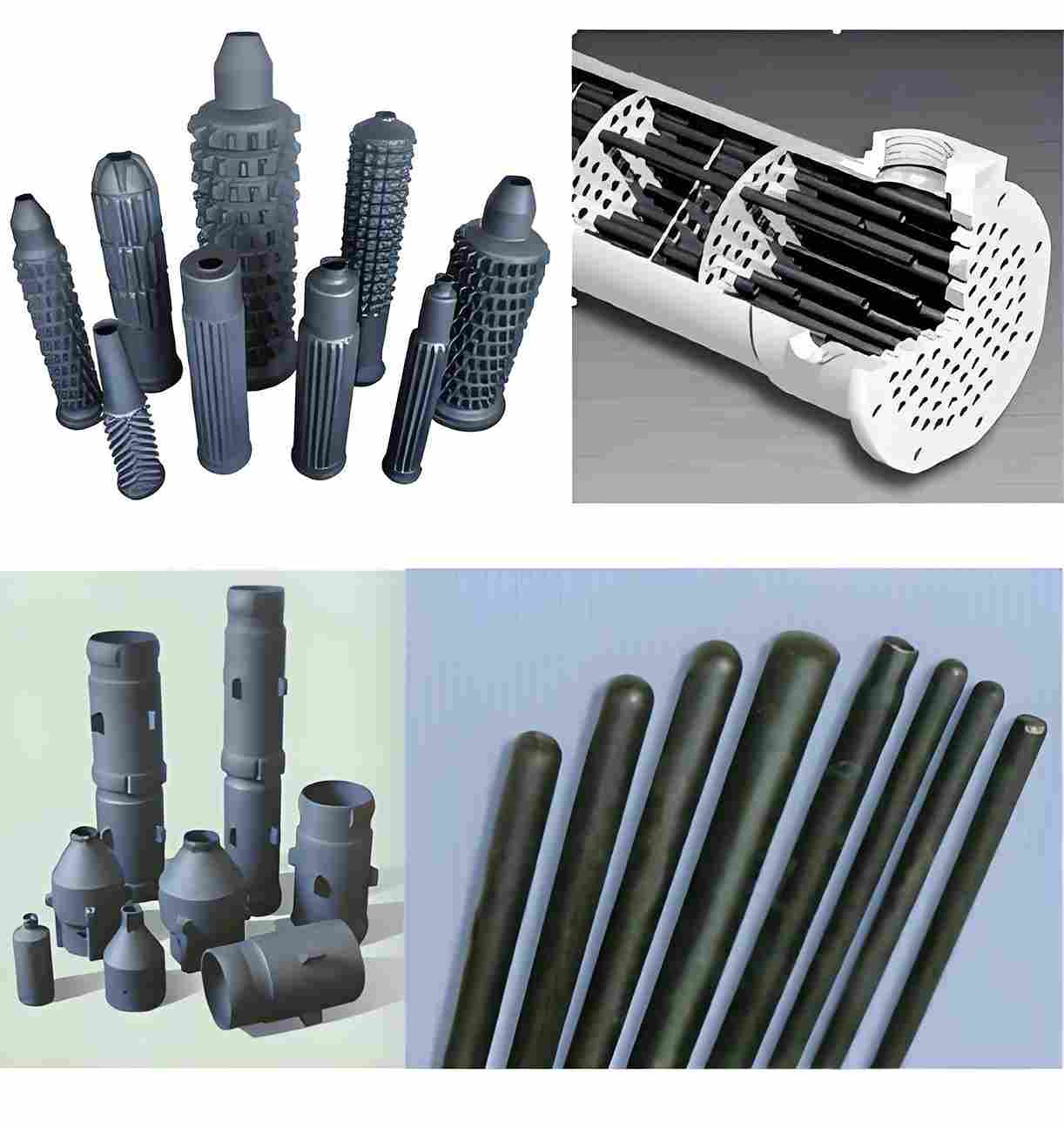
In corrosive and abrasive services, mechanical seals are often the weakest link in a pump. This case study shows how a chemical plant significantly improved pump reliability and cut seal-related downtime by switching from conventional seal faces to silicon carbide (SiC) seal rings.
We will walk through the original problem, the material selection process, the implementation, and the measured results, so reliability engineers and maintenance teams can see when SiC seal rings are worth specifying in their own plants.
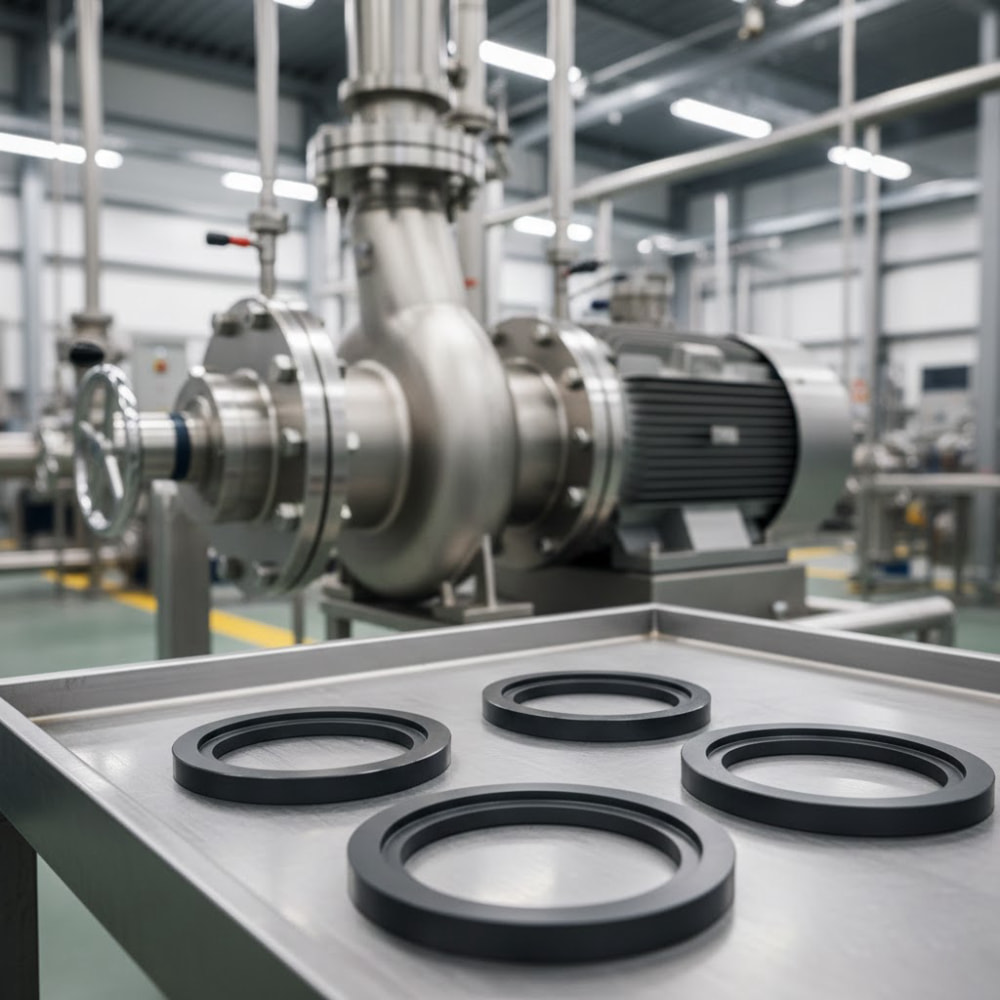
Background: chronic seal failures in a chemical transfer pump loop
The plant in this case is a mid-sized chemical producer handling aggressive, slightly abrasive process fluids at elevated temperatures. A group of horizontal centrifugal pumps on a key transfer line had become a recurring maintenance headache:
- Seal failures every 4–6 months on several critical pumps
- Visible leakage at the seal gland and occasional spray events
- Unplanned shutdowns, emergency repairs, and contaminated bunds
- High spend on replacement seal faces and labour
The existing mechanical seals used a standard combination of carbon vs. hard counterface (typically silicon carbide or tungsten carbide depending on the supplier), but the installed quality and material grade of the hard faces were inconsistent between sites and vendors.
Problem definition: what was really failing?
Before changing materials, the reliability team collected data on the last 12 seal failures:
- Fluid: corrosive chemical mixture with fine suspended solids
- Temperature: 70–95°C during continuous operation
- Pressure: 8–12 bar at the seal
- Failure modes:
- Cracked or chipped hard faces on 7 out of 12 failures
- Severe wear tracks and scoring on 8 out of 12
- Corrosion marks and pitting on 5 out of 12
In other words, the hard face material was not coping well with the combination of abrasion + corrosion + occasional dry-running events. The team concluded that a more robust, consistent hard face material was needed, and focused on high-grade silicon carbide seal rings as the primary candidate.
Why silicon carbide seal rings for this service?
Silicon carbide has long been used as a hard face material in mechanical seals. For this plant’s duty, the key advantages were:
- Excellent wear resistance against fine solids and slurry-like conditions
- High hardness and edge stability, reducing chipping on the seal face
- High thermal conductivity, helping remove frictional heat from the sealing interface
- Low thermal expansion, reducing distortion during temperature swings
- High corrosion resistance to the plant’s acidic/alkaline environment, especially with SSiC
The plant also wanted a supplier who could provide consistent, repeatable material quality and precision tolerances. That made industrial-grade SiC components such as those offered in the Zirsec silicon carbide portfolio a good reference point for target specifications.
Engineering approach: defining the right SiC seal ring
Rather than simply “swapping faces,” the team went through a structured selection process:
1. Define operating envelope
- Continuous operation at 70–95°C, with upset conditions up to 110°C
- Pressure up to 12 bar at the seal
- Fluid: chemically aggressive, with fine hard particles (< 50 μm)
- Occasional short dry-running events during start-up or priming issues
2. Choose SiC grade and pairing
- Pressureless sintered SiC (SSiC) was selected for the stationary and rotating rings on the most severe pumps, due to its:
- High-density, low-porosity microstructure
- High corrosion resistance across the plant’s pH range
- High strength and thermal shock resistance
- Seal face pairing:
- SSiC vs. carbon for the majority of pumps (good mixed-friction behaviour)
- SSiC vs. SSiC on a few high-abrasion pumps where carbon faces had worn too quickly
3. Specify geometry and finish
- Flatness and run-out tolerances tightened compared to previous generic spec
- Controlled surface roughness (Ra) on seal faces to balance leakage and friction
- Attention to chamfer and edge design to reduce chip initiation during installation
4. Align with mechanical seal design
- Seal OEMs confirmed that the new SiC rings would fit existing cartridges without modification.
- Spring loading and face pressure were checked to ensure no overloading of the SiC faces under worst-case pressure.
Implementation: from pilot pumps to plant-wide rollout
The plant chose three problematic pumps on the same process line as pilot units.
Pilot installation
- Existing seals were replaced with cartridges equipped with SSiC seal rings according to the new spec.
- Installation procedures were updated with extra focus on:
- Cleanliness of gland and seal chamber
- Careful handling of SiC faces (no metal tools on sealing surfaces)
- Alignment and piping strain checks
Monitoring period
- Pumps were monitored for 12 months with:
- Seal leakage logs
- Vibration and temperature checks
- Process upsets and dry-running incidents
- Face condition was inspected during planned maintenance stops (without disturbing the seal more than necessary).
Results: improved reliability and lower life-cycle cost
After 12 months of operation, the results were clear:
- Seal life doubled on the pilot pumps compared to the previous 4–6 month average. Two pumps ran more than 12 months without any seal replacement.
- Seal-related unplanned downtime on the pilot line dropped by approximately 60%.
- Visible leakage was reduced to minor weeping only during start-up in a few heavy upset events.
- Inspection showed even, shallow wear tracks on the SiC faces instead of deep scoring and chipping.
Although the SiC seal rings had a higher unit price than the previous generic hard faces, the total cost of ownership improved due to:
- Fewer complete seal replacements per year
- Less emergency call-out work and overtime
- Less lost production from unplanned pump shutdowns
Process improvements beyond materials
Material change alone didn’t deliver all the gains. The project also triggered several process improvements:
- Updated start-up procedures to minimize dry-running and cavitation.
- Better filtration and strainers on the suction line to reduce solids reaching the seal faces.
- Refined flush plans to ensure cleaner fluid at the seal chamber in the harshest services.
- Standardized installation checklist for all mechanical seals, not just the pilots.
These changes help any seal face material, but the combination of SiC seal rings + improved operating discipline provided the largest benefit.
Lessons learned for other chemical plants
From this case study, a few practical lessons emerge for chemical plants struggling with seal reliability:
- Look at failure patterns first. If hard faces are cracking, chipping, or severely worn, upgrading to a well-specified SiC seal ring is a logical step.
- Specify, don’t just order “SiC”. There are differences between SSiC, RBSiC, and other variants. Work with your supplier to match grade, density, and finish to your fluid and duty.
- Start with a pilot. Prove the concept on a few representative pumps, monitor closely, then roll out once the benefit is clear.
- Improve the system, not just the component. Check piping strain, flushing, filtration, and procedures at the same time you upgrade the faces.
- Track data before and after. Mean time between failures (MTBF), leakage incidents, and maintenance hours are the numbers that justify material upgrades to management.
Is your plant a good candidate for silicon carbide seal rings?
You are likely to benefit from SiC seal rings if:
- Your pumps handle corrosive, abrasive, or dirty fluids.
- You see repeated seal failures due to face wear, cracking, or boiling at the interface.
- You run at elevated temperature where thermal conductivity and stability matter.
- Downtime costs significantly more than the price difference between generic and engineered seal faces.
In these situations, high-quality silicon carbide ceramics designed for mechanical seal applications can shift the economics in your favour by improving reliability, not just by reducing face unit cost.
FAQ: Silicon carbide seal rings in chemical pump service
1. Why are silicon carbide seal rings better than standard hard faces in this case?
In this plant, silicon carbide provided a better combination of wear resistance, corrosion resistance, and thermal performance than the generic hard faces previously used. The result was fewer cracked and heavily scored faces, and a longer, more predictable service life.
2. Do silicon carbide seal rings always need to run against carbon?
No. Many seals use SiC vs. carbon for good mixed-friction behaviour, but in very abrasive duties, plants sometimes choose SiC vs. SiC. This can improve wear resistance but requires careful attention to cooling, lubrication, and surface finish. The right pairing depends on your fluid and conditions.
3. Are all “SiC seal rings” the same?
Not at all. Differences in grade (SSiC vs. RBSiC), density, microstructure, impurities, and finishing have a real impact on performance. Specifying material properties and finish, rather than just “SiC,” is essential for repeatable results.
4. What information should I provide when asking for a silicon carbide seal ring quote?
At minimum, provide:
- Pump type and duty (fluid, temperature, pressure)
- Seal size, geometry, and existing materials
- Observed failure modes and typical lifetime
- Any solids content or special chemistry (acids, alkalis, solvents)
This allows the supplier to propose an appropriate SiC grade and design instead of a generic substitute.
5. Will SiC seal rings tolerate occasional dry running?
Silicon carbide has good thermal conductivity and strength, which helps during short upsets, but no mechanical seal likes extended dry running. The goal is to reduce the duration and frequency of dry-running events; SiC makes the system more forgiving, not invincible.
6. How did the plant justify the higher cost of SiC seal rings?
They compared the cost of SiC faces and any additional engineering work against:
- Reduced number of seal replacements per year
- Lower emergency maintenance and overtime
- Less lost production from shutdowns
The improvement in MTBF and reduced downtime made the upgrade cost-effective on a yearly basis.
7. Can I retrofit existing mechanical seals with SiC rings, or do I need new seal cartridges?
In many cases, you can retrofit existing seal designs with SiC rings as long as geometry and face loading are compatible. In other cases, it is cleaner to install new cartridges already engineered around SiC faces. Your seal OEM and SiC supplier can help confirm which approach is best.
8. Does using SiC seal rings increase energy consumption?
Properly finished SiC faces running against suitable counterfaces can operate with low friction. Energy consumption is typically dominated by pump hydraulics, not seal face friction. Any difference in power draw from changing face materials is usually negligible compared to the cost of downtime and failures.
9. What ongoing maintenance changes are needed after switching to SiC?
Most changes are procedural: better cleanliness during installation, careful handling of faces, monitoring of filtration and flush systems, and structured inspection. The core maintenance tasks stay the same, but discipline and attention to detail become more important to fully benefit from the SiC upgrade.
10. How can I start a similar project in my plant?
Begin by selecting 2–3 problem pumps, documenting their current seal performance, and working with a silicon carbide ceramics supplier to specify upgraded seal rings. Implement them as a pilot, track results for at least one maintenance cycle, then use the data to decide on broader rollout and standardization.