Steel foundries live and die by melt cost, uptime, and casting quality. When crucibles fail early, crack during a heat, or consume too much energy, the result is simple: higher cost per ton and constant firefighting in the melt shop.
This case study shows how a steel foundry cut crucible costs and reduced downtime by switching from traditional refractories to silicon carbide (SiC) crucibles. We’ll walk through the original problem, the evaluation process, the implementation, and the measurable results.
Background: rising melt costs and frequent crucible failures
The foundry in this case produces carbon and low-alloy steel castings for industrial machinery. It operates several coreless induction furnaces in the 500–1500 kg range, running multiple heats per day.
Over several years, the melt shop team saw a trend they didn’t like:
- Crucible life decreasing by 15–20% compared to historical averages
- More frequent cracks and leaks in the hottest furnaces
- Rising energy consumption per ton of molten steel
- Unplanned stoppages to change crucibles during busy production periods
The foundry was using conventional crucibles made from aluminosilicate-based refractories. While familiar and initially cheaper, they were not keeping up with higher production intensity and tougher alloy requirements.
Problem analysis: what was really driving the cost?
Instead of just complaining about “bad crucibles,” the foundry’s engineering and finance teams sat down and broke the problem into components:
- Direct crucible cost: purchase price and number of crucibles used per year
- Indirect cost from downtime: time lost when changing crucibles or dealing with failures
- Energy cost: kWh per ton of molten steel, including warm-up time
- Quality and scrap cost: heats affected by inclusions or temperature deviations near end-of-life crucibles
One key finding: although the unit price of a single crucible was not huge, the combination of short lifetime + unplanned failures + extra energy was driving a disproportionate share of melt shop cost.
Why consider silicon carbide crucibles?
The engineering team evaluated different crucible technologies and shortlisted silicon carbide crucibles because of their potential advantages in steel service:
- Higher thermal conductivity than many traditional refractories, improving heat transfer efficiency
- Better thermal shock resistance, reducing crack formation under fast heat-up and cool-down cycles
- Good oxidation and slag resistance in controlled atmospheres
- Higher mechanical strength at temperature, improving resistance to wall thinning and deformation
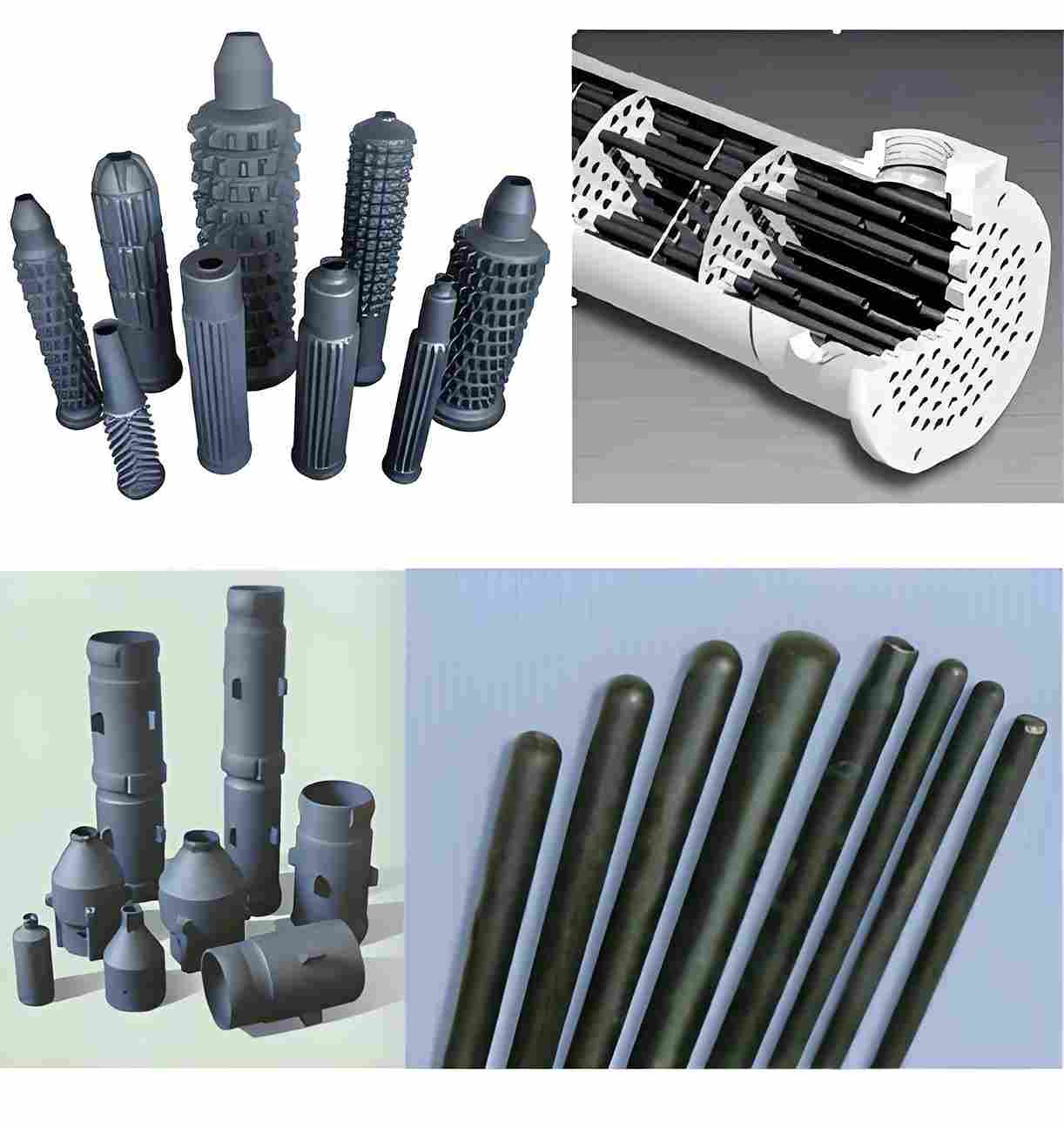
They also wanted a supplier that could deliver consistent, industrial-grade SiC crucibles with documented material properties. Silicon carbide products similar to the silicon carbide crucibles used in other high-temperature industries were used as the performance benchmark.
Engineering evaluation: matching SiC crucibles to the melting process
The foundry did not simply order “SiC crucibles” and hope for the best. They went through a structured evaluation process.
1. Define operating conditions
- Metal: carbon steel and low-alloy steel
- Tap temperature: 1580–1650°C
- Furnace type: coreless induction, 800–1200 kg nominal capacity
- Cycles: 3–6 heats per day per furnace
- Atmosphere: mostly oxidizing, with some cover slag on longer holds
2. Specify crucible requirements
- Targeted crucible lifetime per installation (heats and operating hours)
- Geometry and wall thickness compatible with existing coils and lining
- Acceptable preheat and dry-out procedure for SiC material
- Compatibility with existing slag practice and alloying additions
3. Select silicon carbide crucible design
- High-density SiC body with controlled porosity and strength
- Optimized wall thickness to balance strength, life, and energy transfer
- Appropriate internal finish to reduce metal adhesion and slag buildup
Pilot implementation: side-by-side comparison
The foundry chose one 1000 kg furnace as a pilot unit. For six months, they ran a side-by-side comparison between the existing crucible type and the new silicon carbide crucibles.
Data collected
- Number of heats per crucible until retirement
- Visual condition at end-of-life (cracks, wall thickness, slag attack)
- Energy consumption per ton for comparable heats
- Unplanned downtime events related to crucible issues
- Operator feedback on installation, preheat, and melting behaviour
Operating adjustments
- Refined start-up and preheat curves to respect SiC thermal shock limits
- Minor changes to slag practice to avoid overly aggressive chemistries
- Updated inspection checklist to include specific SiC wear indicators
Results: longer life, fewer stoppages, better energy efficiency
After multiple cycles of both crucible types, the foundry compared results from the pilot furnace.
1. Crucible life
- Traditional crucibles: average life of X heats per crucible (plant baseline)
- Silicon carbide crucibles: average life of approximately 1.5–2.0 × X heats per crucible
Even at the lower end of this range, the SiC crucibles clearly outperformed the previous solution in terms of total heats per crucible.
2. Unplanned downtime
- Crucible-related unplanned stops dropped by about 50–60% on the pilot furnace.
- Pre-emptive replacements based on inspection became the rule, not late emergency changes.
3. Energy consumption
- Energy per ton of molten steel decreased by 3–5% due to improved thermal conductivity and refined practice.
- Heat-up times were more consistent from one crucible installation to the next.
4. Quality and process stability
- Fewer process deviations near the end of crucible life (less wall hot-spot degradation).
- Reduced risk of inclusions and temperature dips at tap due to unexpected crucible problems.
Economic impact: cost per ton, not cost per crucible
Although silicon carbide crucibles had a higher unit price than the previous refractories, the economic analysis looked at cost per ton of molten steel, not just per crucible:
- Fewer crucibles consumed per year due to longer life
- Less labour and overtime for change-outs and emergency work
- Reduced production losses from unplanned furnace outages
- Lower energy usage per ton
When all factors were included, the foundry calculated that the SiC crucible solution delivered a meaningful reduction in melt cost per ton, with payback well within the first year of plant-wide rollout.
Lessons learned for other steel foundries
From this case study, several practical lessons are relevant to other melt shops considering silicon carbide crucibles:
- Evaluate total cost, not unit price. Crucible price is only one part of the equation; downtime, labour, and energy matter more.
- Match crucible design to furnace and practice. Wall thickness, geometry, and SiC grade must fit your induction or fuel-fired furnace and slag practice.
- Introduce SiC via a controlled pilot. Choose a representative furnace, collect data, and refine heating curves and inspection practices.
- Standardize inspection and retirement criteria. Replace crucibles based on condition and planned outages, not just failure events.
- Work with an experienced SiC supplier. Industrial-grade crucibles with consistent quality, such as those in modern silicon carbide crucible ranges, make it easier to predict lifetime and performance.
Is your foundry a good candidate for SiC crucibles?
You may benefit from silicon carbide crucibles if:
- You operate at high tap temperatures with demanding alloy schedules.
- You suffer frequent crucible failures or leaks in your hottest furnaces.
- Energy cost per ton is a significant part of your melt shop budget.
- Unplanned furnace downtime hurts delivery performance for your customers.
In such cases, upgrading to well-specified SiC crucibles can be a way to buy reliability, not just refractories.
FAQ: Silicon carbide crucibles in steel foundries
1. Are silicon carbide crucibles compatible with all steel types?
Silicon carbide crucibles are widely used for carbon and low-alloy steels and can be applied to many other grades, provided that slag practice, atmosphere, and temperature are controlled. For highly reactive alloys or special steels, specific testing and material selection are recommended.
2. Will SiC crucibles always last longer than traditional crucibles?
Not automatically. SiC crucibles have the potential for longer life and better efficiency, but results depend on furnace design, support, heating curves, and slag chemistry. Plants that adapt their practice to the new material see the best gains.
3. Do SiC crucibles require special preheating procedures?
Yes. While SiC handles high temperatures well, it is still a ceramic and must be heated and cooled in a controlled way to avoid thermal shock. Your supplier should provide recommended preheat and dry-out curves tailored to crucible size and furnace type.
4. How do SiC crucibles affect energy consumption?
Because silicon carbide has higher thermal conductivity than many traditional refractories, crucibles can help improve heat transfer efficiency. In this case study, the foundry measured a few percent reduction in kWh per ton, which added up over thousands of tons per year.
5. Are silicon carbide crucibles more sensitive to slag attack?
SiC crucibles generally perform well with appropriate slag compositions, but aggressive or highly basic slags can still cause wear and chemical attack. It is important to align slag practice with crucible material recommendations.
6. What changes are needed in daily operation?
Most changes are procedural: slightly adjusted heating curves, more disciplined inspection, and attention to slag and tapping practice. Operators typically adapt quickly once they see fewer failures and easier temperature control.
7. How do I justify the switch to management?
Build a simple model using:
- Average crucible life (heats) before and after
- Number of unplanned outages avoided
- Energy savings per ton
- Reduced scrap or quality incidents linked to crucible issues
Converting these to annual cost per ton provides a clear financial argument for upgrading.
8. Can I run a mix of traditional and SiC crucibles in the same shop?
Yes. Many foundries start by using SiC crucibles on the most critical or hottest furnaces while keeping traditional crucibles in less demanding lines. Over time, data from the mixed setup usually guides a broader standardization.
9. What information should I provide when requesting SiC crucible recommendations?
Provide details on furnace type and size, metal grade, tap temperature, slag practice, current crucible life, and observed failure modes. This allows the supplier to recommend an appropriate SiC design instead of a generic substitute.
10. How does this case relate to my foundry?
Even if your alloys, furnace sizes, or production volumes differ, the logic is the same: evaluate crucibles by total cost of melting, not just purchase price. If you face similar problems with life, leaks, or energy consumption, a structured trial with silicon carbide crucibles can show whether the upgrade is justified in your own operation.