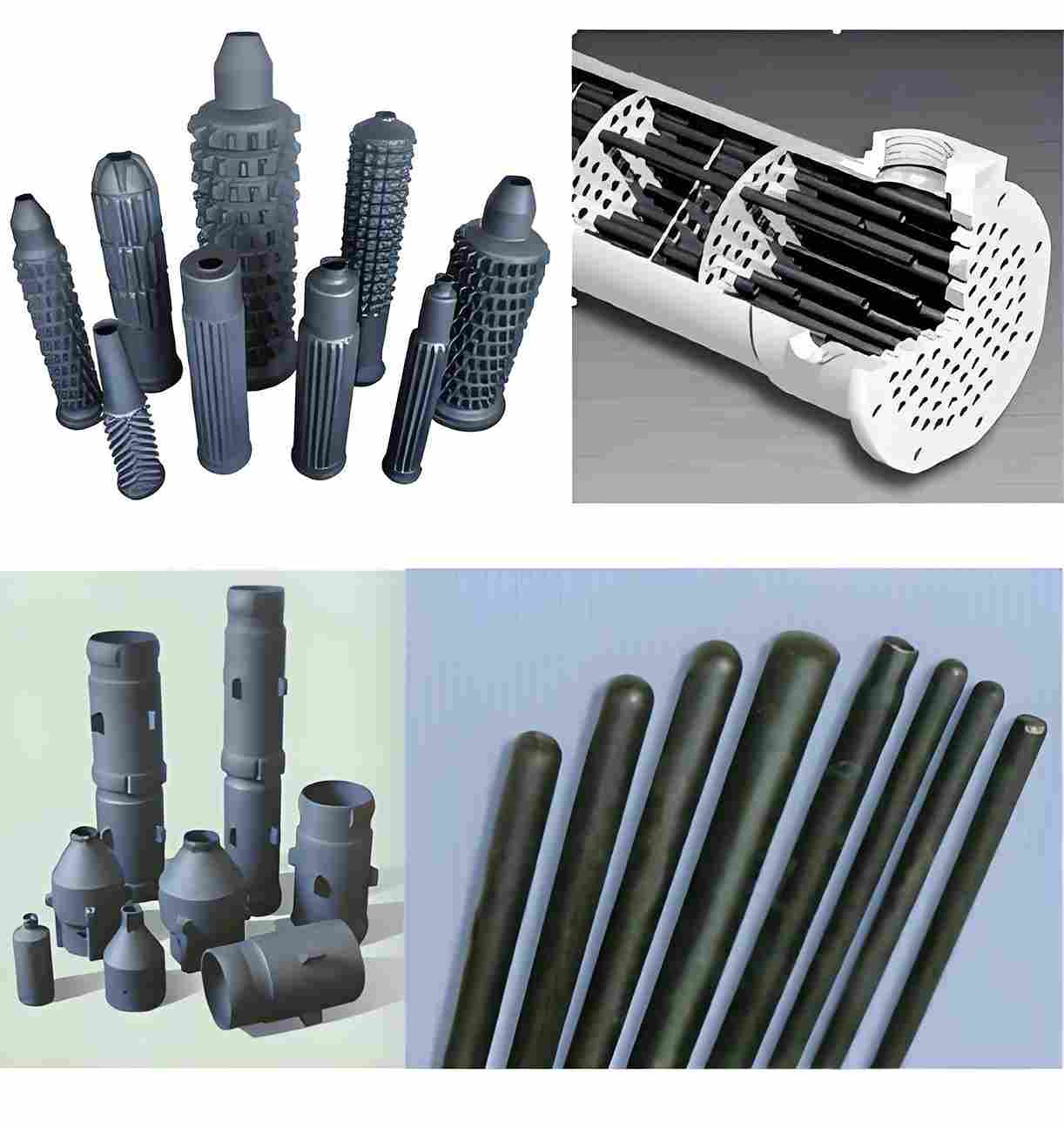
Industrial furnace OEMs are under constant pressure to deliver higher efficiency, lower fuel consumption, and longer component life. In many gas-fired designs, traditional metallic burner tubes quietly limit performance through heat loss, distortion, and frequent replacement.
This case study explains how a furnace manufacturer achieved 20% higher thermal efficiency on a key product line by switching from metallic burner tubes to silicon carbide (SiC) burner tubes. The project involved design tweaks, controlled testing, and a hard look at total cost of ownership.
Background: efficiency targets and burner tube limitations
The OEM in this case focuses on industrial furnaces for heat treatment and process heating. Customers were demanding:
- Lower gas consumption per ton of product
- Tighter temperature uniformity across the workload
- Longer intervals between major maintenance shutdowns
The existing design used metallic burner tubes that:
- Lost significant heat through conduction into the outer shell
- Distorted over time, affecting flame shape and heat distribution
- Required frequent replacement due to high-temperature creep and oxidation
Engineering suspected that upgrading to silicon carbide burner tubes could improve both thermal efficiency and reliability, provided the change was properly engineered and validated.
Why silicon carbide burner tubes?
Silicon carbide ceramics offer properties that are attractive for burner tube applications:
- High-temperature strength with low creep compared to metallic tubes
- Excellent thermal shock resistance for repeated firing cycles
- High thermal conductivity in the hot zone, improving radiant heat transfer into the furnace chamber
- Good oxidation and corrosion resistance in combustion atmospheres
The OEM had prior experience using SiC in components such as silicon carbide tubes for process and protection duties, so they looked for SiC burner tubes with similar material quality and dimensional control.
Engineering design: from metal to SiC burner tubes
The transition was not a simple material swap. The design team followed a structured process to adapt the furnace and burner system.
1. Define the operating envelope
- Furnace type: direct-fired gas furnace, multi-burner configuration
- Operating temperature: 900–1150°C continuous, peaks up to 1200°C
- Fuel: natural gas with standard combustion air
- Atmosphere: mostly oxidizing
- Cycle: 16–24 hour runs with frequent hot restarts
2. Select SiC burner tube geometry and grade
- High-density SiC body with low porosity to withstand thermal cycling
- Tube diameters matched to burner capacity and flame profiles
- Wall thickness optimized to balance mechanical strength and heat transfer
- Material grade chosen for good oxidation resistance and thermal conductivity in the operating range
3. Adapt burner and mounting design
- Re-designed burner mounting flanges and seals to accommodate ceramic tubes
- Adjusted flame stabilizer and mixing devices to suit the new internal geometry
- Ensured tube supports allowed thermal expansion without creating stress points in the SiC
4. Simulation and pre-testing
- Thermal simulations to predict temperature distribution in the furnace with SiC tubes
- Stress checks for the tube in worst-case firing conditions and cold starts
- Material compatibility review for refractories, seals, and anchoring systems
Controlled comparison: metal vs SiC burner tubes
The OEM built two test furnaces of the same model:
- Reference furnace: original design with metallic burner tubes
- Test furnace: identical except for silicon carbide burner tubes and minor mounting changes
Measured parameters
- Fuel consumption per hour at a fixed setpoint
- Time to reach operating temperature from cold and warm starts
- Temperature uniformity in the workload zone
- Tube surface temperatures and thermal profiles
- Tube condition after repeated thermal cycles
Test conditions
- Same burner model, control system, and firing curve for both furnaces
- Repeatable, production-like workload in the hot zone
- Monitoring over several hundred hours of operation, including start-up and shutdown cycles
Results: 20% higher efficiency and better stability
1. Fuel efficiency improvement
- The SiC burner tube furnace used approximately 20% less fuel to maintain the same setpoint temperature and workload compared with the metallic-tube furnace.
- Part of the gain came from reduced heat loss through the tube into external structures and better radiant transfer into the chamber.
2. Faster and more consistent heat-up
- Time to reach operating temperature from cold was reduced by 10–15%.
- Repeatability between cycles improved; the furnace reached setpoint more consistently under varying ambient conditions.
3. Improved temperature uniformity
- Workload temperature uniformity improved by several degrees Celsius across the measurement grid.
- Stable tube geometry meant flame shape and heat distribution stayed closer to the original design over time.
4. Component life and maintenance
- After extended testing, SiC burner tubes showed no significant distortion and only minor surface oxidation.
- Metallic tubes in the reference furnace displayed creep, bowing, and localized thinning in high-heat regions.
- Maintenance intervals for burner tube replacement were extended, reducing planned downtime.
Total cost of ownership: more than just tube price
Silicon carbide burner tubes cost more per piece than metallic tubes. However, the OEM evaluated total cost from both their own and the end customer’s perspectives:
- Lower fuel consumption over the furnace lifetime
- Less downtime for tube change-outs and related maintenance
- Improved process stability, reducing scrap and rework in customer plants
- Reduced risk of catastrophic tube failures at high temperature
When these factors were included, the higher initial cost of SiC burner tubes was more than offset by operating savings. This allowed the OEM to position the upgraded furnace as a premium high-efficiency model with a clear payback story for end users.
How the OEM turned performance into a selling point
After validating the design, the manufacturer updated its product offering:
- Introduced the SiC burner tube design as a standard or optional package on key furnace models
- Developed customer-facing documentation showing before/after fuel consumption and expected payback
- Trained sales and application engineers to explain when and why SiC burner tubes make sense
- Built reference cases with early adopters, including monitored efficiency data and reliability reports
Lessons learned for furnace OEMs and end users
Several practical conclusions came out of the project:
- Thermal efficiency is a system property. Burner tubes, refractories, insulation, and controls all interact; material upgrades work best when treated as system-level changes.
- Material specification matters. It’s not enough to ask for “SiC”; you need the right grade, wall thickness, and geometry for your duty.
- Controlled testing pays off. Side-by-side comparison against a known baseline created credible data for sales and engineering decisions.
- Total cost of ownership wins the argument. When engineering can show fuel savings and maintenance reduction, higher component cost is easier to justify.
Is your furnace design a candidate for SiC burner tubes?
Furnace OEMs and operators should seriously consider SiC burner tubes if they face:
- High gas consumption and pressure to improve energy efficiency
- Frequent burner tube distortion, oxidation, or premature failures
- Challenging duty cycles with frequent starts/stops and high peak temperatures
- Customers asking for lower CO₂ per ton and better process control
Well-engineered SiC components, such as high-performance silicon carbide tubes, provide a practical path to achieve these goals when integrated correctly into burner and furnace designs.
FAQ: SiC burner tubes in industrial furnaces
1. Can silicon carbide burner tubes be retrofitted into existing furnaces?
In many cases, yes. Retrofitting is possible if mounting, support, and burner design can be adapted to the new tube geometry and material. A design review is essential to ensure proper expansion allowance and flame pattern.
2. Do SiC burner tubes require special start-up procedures?
They require controlled heat-up and cool-down, similar to other ceramic components. Most OEMs adopt slightly modified firing curves at start-up to manage thermal shock. Once at temperature, SiC tubes handle continuous high-heat duty very well.
3. How do SiC burner tubes improve efficiency?
They reduce conduction losses into surrounding structures and improve radiant heat transfer into the furnace chamber. Stable geometry also keeps burner performance closer to the original design over time, which helps maintain efficiency as the furnace ages.
4. Are SiC burner tubes suitable for all fuels and atmospheres?
They are widely used with natural gas and other clean fuels in oxidizing atmospheres. For highly reducing, carburizing, or contaminated atmospheres, the suitability depends on specific conditions and may require additional testing or alternative materials.
5. How long do silicon carbide burner tubes typically last?
Lifetime depends on temperature, cycle frequency, atmosphere, and mechanical support. In many applications, OEMs and end users see significantly longer life than with metallic tubes, especially where distortion and oxidation are the primary failure modes.
6. Do SiC burner tubes increase maintenance complexity?
Installation and handling require more care than with metal parts, but maintenance frequency usually decreases because tubes do not distort as quickly and are less prone to certain failure modes. Clear procedures and training solve most handling issues.
7. Are there size limits for SiC burner tubes?
Practical limits are set by manufacturing capabilities, furnace design, and handling. Large-diameter or very long tubes require careful design and support. Many standard furnace sizes fall well within typical SiC manufacturing ranges.
8. How should I justify the switch to SiC burner tubes?
Build a simple model using:
- Current fuel consumption per hour or per ton
- Current burner tube replacement frequency and cost
- Estimated efficiency gain and life extension with SiC tubes
- Value of reduced downtime and improved temperature control
Comparing “before” and “after” scenarios over a 1–3 year period usually makes the economic impact clear.
9. Will SiC burner tubes change furnace temperature uniformity?
Yes, typically for the better. More stable tube geometry and consistent heat transfer tend to improve temperature uniformity, provided burner tuning and refractory design are also correct.
10. What is the best first step for an OEM considering SiC burner tubes?
Start with a single furnace model or pilot installation. Work with a silicon carbide supplier to define tube geometry and material grade, adapt the burner mounting, and then run controlled tests against your current design. Use the results to decide how far and how fast to roll out SiC burner tubes across your product range.