Engineers and buyers hear a lot about silicon carbide ceramics, but real purchasing and design decisions still come down to a few practical questions: What exactly is SiC? Where does it make sense to use it? How does it compare to other ceramics and metals? And how do you avoid expensive mistakes when specifying custom parts?
This guide answers the top 10 frequently asked questions about silicon carbide ceramics, focusing on real industrial use cases, not textbook theory.
1. What are silicon carbide ceramics?
Silicon carbide (SiC) is a hard, covalently bonded ceramic material made from silicon and carbon. In industrial applications, SiC ceramics are typically sintered or reaction-bonded components with:
- Very high hardness and wear resistance
- Excellent high-temperature strength and creep resistance
- Good thermal conductivity compared to many other ceramics
- Low thermal expansion and good thermal shock resistance
- Strong corrosion resistance in many acidic and alkaline environments
Because of this combination, SiC ceramics are widely used in pumps, valves, furnaces, kilns, chemical equipment, and metallurgical processes where metals and conventional refractories struggle.
2. Where are silicon carbide ceramics most commonly used?
Typical industrial applications include:
- Pumps and seals – mechanical seal rings, sleeves, bearings for chemical and slurry pumps
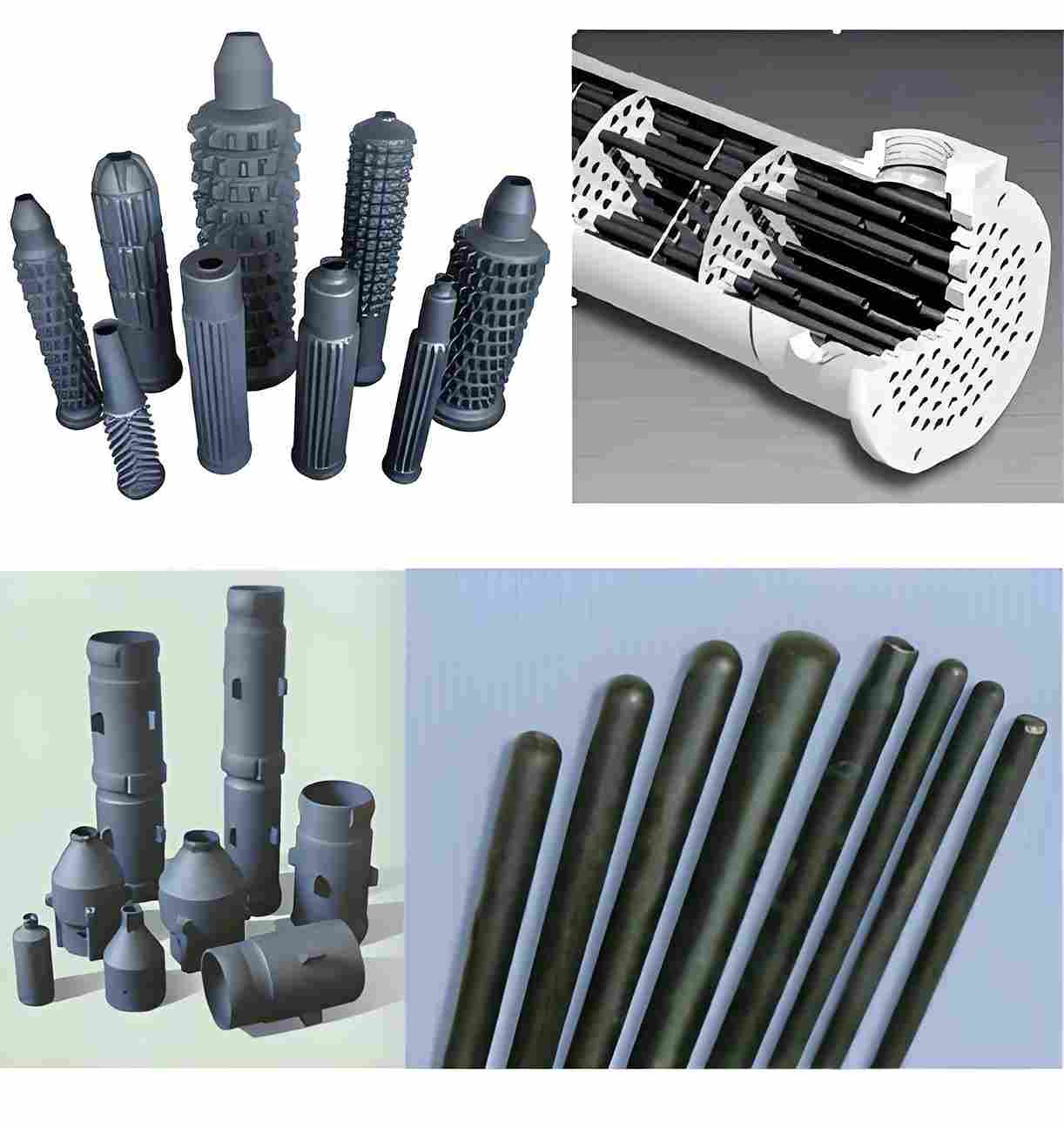
- High-temperature equipment – radiant tubes, silicon carbide tubes, burner tubes, thermocouple protection tubes
- Metal melting and heat treatment – silicon carbide crucibles, kiln furniture, plates, beams, rollers
- Wear protection – SiC wear plates, liners, and nozzles in mining, cement, and bulk handling
- Filtration and membranes – porous SiC elements for hot gas or liquid filtration
In many of these areas, silicon carbide extends service life, improves reliability, or allows higher operating temperatures than traditional materials.
3. What are the main types of silicon carbide ceramics?
In practice, you will usually encounter three main types of SiC ceramics:
- Pressureless sintered SiC (SSiC)
- High purity, very dense, low porosity
- Excellent corrosion resistance and high strength
- Common in mechanical seal rings, high-purity components, and demanding chemical services
- Reaction-bonded SiC (RBSiC / SiSiC)
- Produced by infiltrating silicon into a porous SiC preform
- Good shape capability and strength, suitable for larger structural parts
- Frequently used in kiln furniture, beams, burners, and structural furnace components
- Recrystallized SiC (RSIC)
- Made by recrystallizing SiC grains at high temperature without a sintering aid
- High-temperature stability and good thermal shock resistance
- Used for certain furnace and kiln applications where very high temperatures and thermal cycling are critical
The best choice depends on temperature, environment, mechanical loading, and required dimensional precision.
4. How do silicon carbide ceramics compare to alumina, zirconia, and other ceramics?
Compared with common advanced ceramics such as alumina and zirconia, silicon carbide generally offers:
- Better wear resistance against abrasive slurries and solids
- Higher thermal conductivity, which helps with heat transfer and reducing thermal gradients
- Lower density than many oxide ceramics, reducing component weight
- Excellent performance at high temperature with good thermal shock resistance
On the other hand:
- Alumina may be more economical for less demanding duties.
- Zirconia offers very high toughness and is sometimes preferred for impact or highly cyclic stress conditions at moderate temperatures.
The right material is the one that balances performance, risk, and cost in your specific operating conditions, not simply the highest-performing ceramic on paper.
5. When does it make sense to choose silicon carbide over metals?
Silicon carbide is especially attractive when:
- Metals suffer severe abrasive wear and require frequent replacement.
- Corrosion or high-temperature oxidation eats through metallic components too quickly.
- Components must operate at temperatures where metals creep or lose stiffness.
- You need hard, dimensionally stable sealing surfaces in pumps and valves.
Common examples include mechanical seal rings in chemical pumps, wear plates in mining equipment, and high-temperature furnace tubes where metallic parts simply cannot survive the combination of temperature, stress, and environment.
6. What information do I need to provide when requesting a silicon carbide part?
The more information you provide up front, the better the design and quotation. At minimum, it helps to share:
- Function and location of the part in the system (pump seal ring, furnace tube, wear liner, etc.)
- Medium (fluid or gas type, presence of solids, pH, chemical composition)
- Operating temperature and pressure, including peaks and upset conditions
- Mechanical loads (bending, axial load, rotation speed, impact conditions)
- Required dimensions, tolerances, and surface finish
- Any cleanliness or purity requirements, especially for semiconductor or high-purity applications
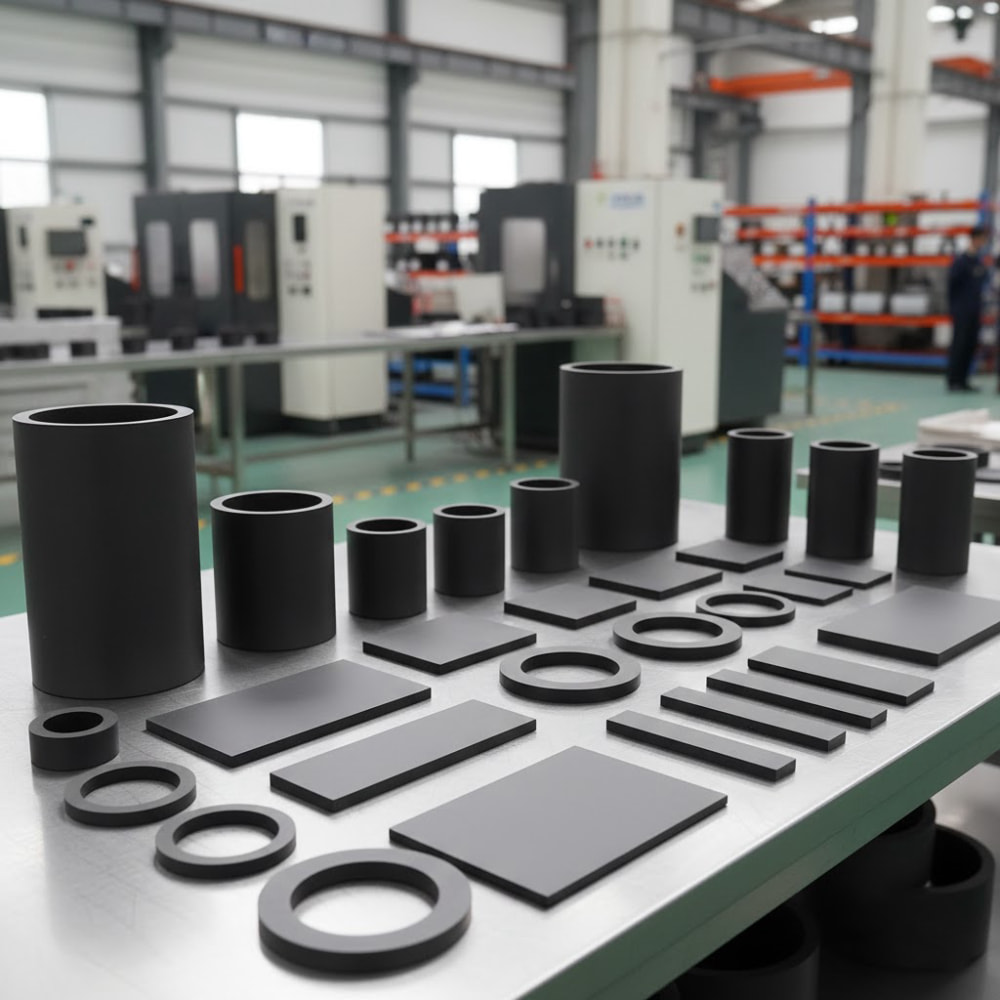
For standard shapes like tubes, plates, or crucibles, you can often start from catalog dimensions such as SiC tubes or SiC plates, then customize as needed.
7. Are silicon carbide ceramics easy to machine or modify?
Short answer: no, they are not “shop-machinable” like metals. Fully sintered silicon carbide is extremely hard and typically requires diamond grinding for dimensional adjustments. This has several implications:
- Most of the shape is created before sintering (by pressing, isostatic molding, extrusion, etc.).
- Post-sintering machining is limited to precision surfaces, fits, and fine adjustments.
- Designs that require heavy machining after sintering will be more expensive.
To control cost, work with the supplier early so that the part is designed for near-net-shape production with minimal grinding.
8. How long do silicon carbide ceramic components typically last?
Lifetime depends strongly on the application. There is no universal number. Typical patterns include:
- Mechanical seal rings in chemical pumps: often 2–5 times longer life than conventional hard faces in the same duty, when system conditions are controlled.
- Furnace tubes and kiln furniture: multi-year service in continuous or well-managed cyclic operation.
- Wear liners and nozzle components: sometimes several times longer than hardened steels in severe abrasion.
To get a realistic estimate, combine:
- Supplier experience with similar applications
- Your own baseline data using existing materials
- Field trials with careful monitoring of wear and failure modes
9. What are the main limitations or risks when using silicon carbide ceramics?
Silicon carbide is not a magic material. Its main limitations are:
- Brittle fracture risk if parts are subjected to high impact or misalignment beyond design limits.
- Sensitivity to tensile stress concentrations, especially at sharp corners, notches, or poorly supported sections.
- Higher initial component cost compared with standard metals or refractories.
Most of these risks are manageable with proper engineering:
- Use generous radii and avoid sharp transitions in critical areas.
- Design supports and housings to minimize bending and point loading.
- Match SiC grade and geometry to the real operating environment, not ideal conditions.
10. How should I start evaluating silicon carbide ceramics for my plant?
The most effective approach is structured and incremental:
- Identify pain points: pumps, furnaces, or components that fail frequently due to wear, corrosion, or temperature.
- Select a pilot application: one or two components where the impact of improved life or performance is clear.
- Define conditions: gather operating data and failure history for those components.
- Work with a specialized supplier: develop a SiC solution (standard or custom) tailored to your duty.
- Run a controlled trial: monitor performance, lifetime, and any system changes required.
- Compare total cost: include downtime, labour, and scrap, not just part price.
Once the business case is proven, you can systematically extend silicon carbide solutions to similar equipment and processes across your plant.
Conclusion
Silicon carbide ceramics sit at the intersection of high wear resistance, high temperature capability, and chemical durability. When applied thoughtfully, they can transform chronic problem areas into stable, predictable assets. The key is to treat SiC as an engineered solution, not just a material swap, and to start with the applications where reliability and uptime matter most.