Silicon carbide ceramic has quietly moved from “special material” to “go-to solution” in many industrial plants. When pumps, furnaces, and wear parts keep failing, engineers often discover that silicon carbide (SiC) is one of the few materials that can actually survive the combination of temperature, corrosion, and abrasion.
This article explains what silicon carbide ceramic is, how it is made, and where it is used in real-world applications, so you can decide if it fits your equipment or project.
What is silicon carbide ceramic?
Silicon carbide is a compound of silicon (Si) and carbon (C). In industrial use, it is processed into a dense ceramic with a combination of properties that is difficult to match:
- Very high hardness and wear resistance
- High strength and stiffness at elevated temperature
- Good thermal conductivity compared with many other ceramics
- Low thermal expansion and strong thermal shock resistance
- Excellent chemical resistance in many acidic and alkaline environments
Unlike metals, silicon carbide does not soften or creep easily at high temperature. Unlike many refractories, it can be manufactured with tight tolerances and precision surfaces suitable for seals, bearings, tubes, plates, and complex shapes.
How is silicon carbide ceramic made?
Several manufacturing routes are used to produce industrial silicon carbide ceramics. The most common types you will encounter are:
Pressureless sintered SiC (SSiC)
- Fine SiC powder is shaped and then sintered at high temperature without applied pressure.
- Results in a very dense, low-porosity microstructure.
- Offers excellent corrosion resistance and high strength.
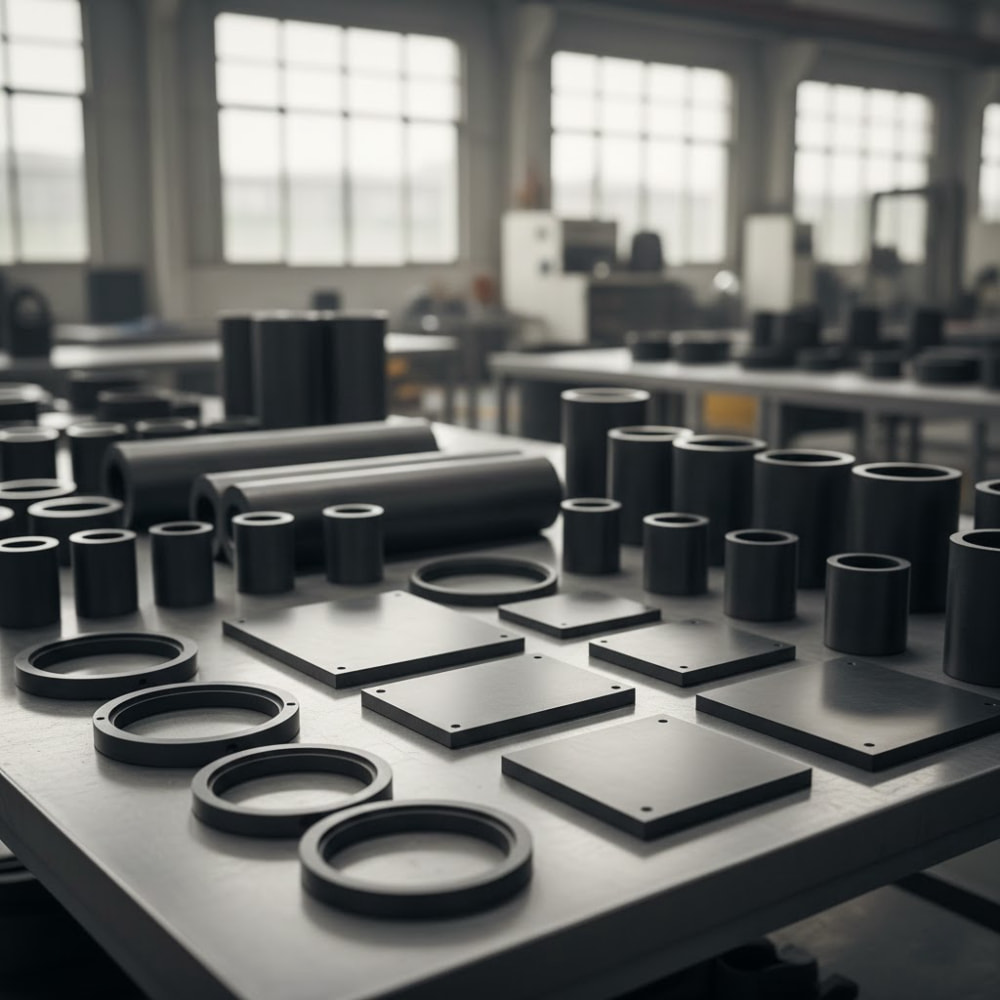
- Often used for mechanical seal rings, precision sleeves, bearings, and high-purity components.
Reaction-bonded SiC (RBSiC / SiSiC)
- A porous SiC preform is infiltrated with molten silicon, which reacts to form additional SiC.
- Good for large or complex shapes with good mechanical strength.
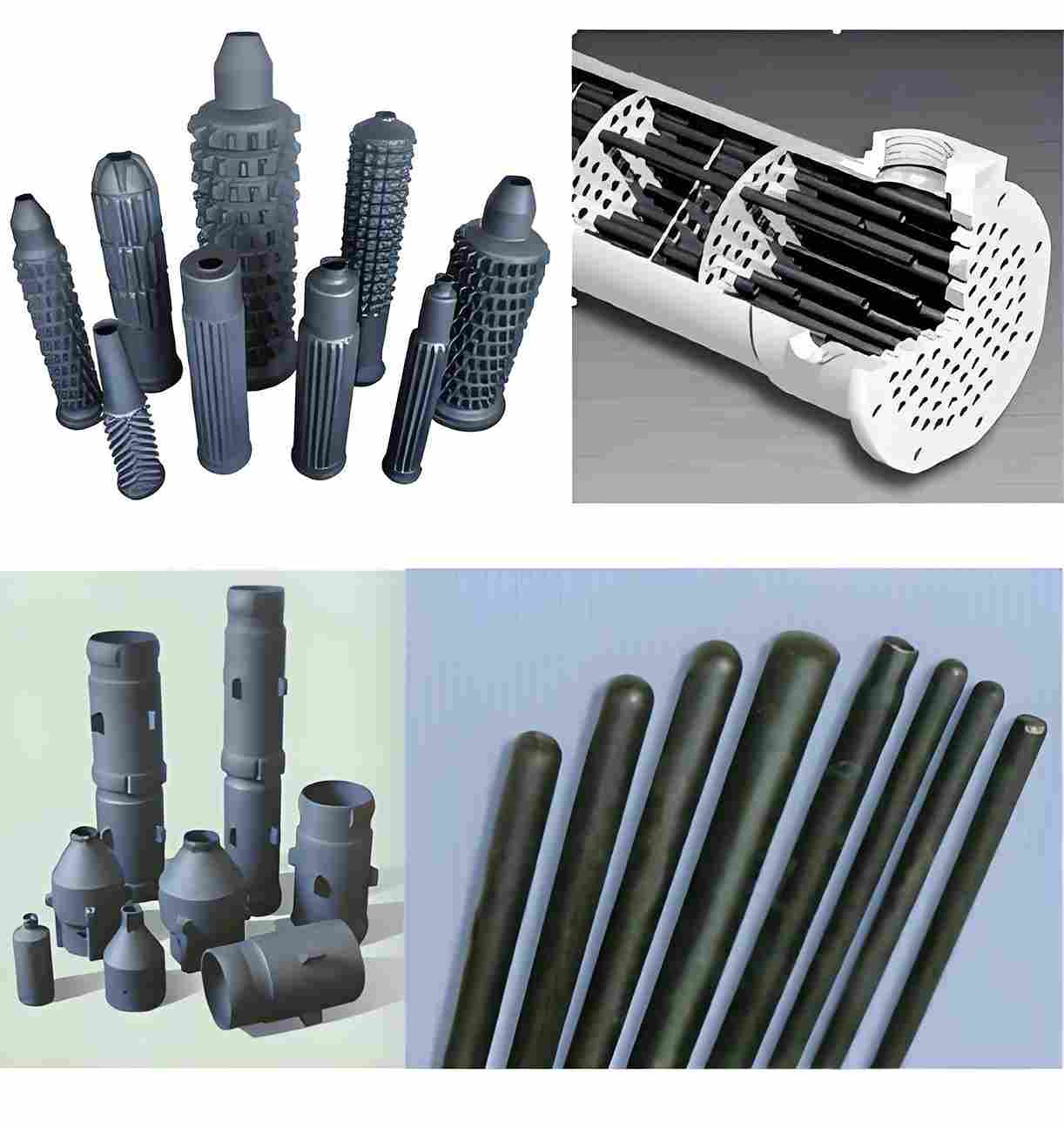
- Common in kiln furniture, beams, burner tubes, structural furnace parts, and rollers.
Recrystallized SiC (RSIC)
- Produced by recrystallizing SiC grains at very high temperature.
- High-temperature stability and strong thermal shock resistance.
- Used in some extreme-temperature furnace and kiln applications.
In every case, the main idea is similar: create a ceramic body with a controlled microstructure so it can survive high temperature, thermal cycling, and harsh media without rapid wear or cracking.
Key properties of silicon carbide ceramics
Engineers choose silicon carbide ceramic because its property set lines up well with difficult service conditions:
- Hardness: Extremely hard, resisting abrasion from sharp particles and slurries.
- Wear resistance: Maintains dimensions under sliding wear where steels and even hardened alloys fail.
- High-temperature capability: Retains strength and stiffness at temperatures where many metals creep.
- Thermal shock resistance: Low thermal expansion and good thermal conductivity help it survive rapid heating and cooling when correctly designed.
- Chemical resistance: Stable in many corrosive fluids across a wide pH range, especially in high-purity SSiC grades.
- Dimensional stability: Suitable for tight tolerances and precision sealing surfaces.
These properties explain why silicon carbide is often specified after repeated failures with traditional materials. It is not the cheapest option per kilogram, but it frequently becomes the lowest-cost option per operating hour in severe duty.
Where is silicon carbide ceramic used?
Silicon carbide ceramics show up anywhere equipment must survive a harsh combination of wear, temperature, and corrosion. Below are the major application areas and examples of common components.
1. Pumps, seals, and fluid handling
One of the most widespread uses of SiC ceramics is in mechanical seals and pump components for chemical, petrochemical, and slurry services.
- Mechanical seal rings: SSiC seal faces for chemical pumps, reducing leakage and extending seal life.
- Sleeves and bearings: SiC sleeves and radial bearings for pumps and mixers in abrasive or corrosive media.
- Valve components: Balls, seats, and discs in severe-service valves handling erosive or corrosive fluids.
In these roles, silicon carbide often replaces metal or graphite components that wear out too quickly. Its combination of hardness, chemical resistance, and thermal stability makes it ideal for chemical processing, power plants, and seawater systems.
2. High-temperature tubes and furnace components
Silicon carbide ceramics are widely used in high-temperature equipment where metallic parts distort or oxidize.
- Radiant and process tubes: SiC tubes used in burners, heat exchangers, and process lines inside furnaces.
- Thermocouple protection tubes: SiC tubes that shield sensors from direct flame and corrosive atmospheres.
- Furnace hardware: Burner nozzles, flame tubes, and structural supports.
For example, high-performance silicon carbide tubes combine high-temperature strength with thermal shock resistance, making them suitable for industrial furnaces, chemical reactors, and heat treatment lines.
3. Metal melting, foundry, and heat treatment
In foundries and heat-treatment shops, silicon carbide ceramics are used where metal and traditional refractories struggle.
- Crucibles: SiC crucibles for melting non-ferrous metals and some steel grades, providing good thermal conductivity and long service life.
- Kiln furniture: Plates, beams, setters, and supports in kilns and heat-treatment furnaces.
- Rollers and beams: SiC rollers and beams in roller kilns and continuous furnaces.
Products like silicon carbide crucibles and kiln plates are chosen for their ability to handle repeated thermal cycling while maintaining strength and flatness.
4. Wear liners, nozzles, and mining components
Because of its extreme hardness, silicon carbide ceramic is also a strong candidate for severe wear applications:
- Wear plates and liners: SiC tiles or plates used to protect chutes, hoppers, and pipe bends in mining and bulk handling.
- Spray and sandblasting nozzles: SiC nozzles that resist erosion under high-velocity abrasive flow.
- Liners in pumps and valves: For slurry services in mining, minerals, and dredging.
In many mining or cement plants, SiC liners in the worst wear zones run several times longer than hardened steels or rubber, helping to shift maintenance from emergency repairs to planned shutdowns.
5. Chemical processing and corrosive environments
Chemical plants deal with aggressive fluids that can destroy conventional materials. Silicon carbide ceramics are used where corrosion and abrasion happen together:
- Mechanical seal rings in acid and alkali circulation pumps
- SiC-lined components in scrubbers, absorbers, and reactors
- SiC internals in heat exchangers exposed to corrosive media
The combination of chemical resistance and high hardness makes SiC attractive in duties where metallic “corrosion-resistant” alloys still suffer from erosion-corrosion or where polymer linings lack temperature capability.
6. High-purity and semiconductor applications
In semiconductor and high-purity applications, silicon carbide components are valued for their cleanliness, stability, and high-temperature behaviour:
- SiC wafers and carriers in high-temperature processes
- Components in epitaxy, diffusion, or CVD equipment
- High-purity fixtures and supports in cleanroom-compatible furnaces
Here, the focus is not only on mechanical performance but also on low contamination and stable behaviour in controlled atmospheres.
Advantages of silicon carbide ceramics in industrial systems
In many real projects, the decision to use SiC is based on a small set of practical benefits:
- Longer component life: Fewer failures, less frequent replacement, and higher uptime.
- Improved reliability: Less variation in performance as components age.
- Higher operating limits: Ability to run at higher temperatures, speeds, or with more aggressive media.
- Lower total cost of ownership: Savings from reduced downtime, labour, and scrap, even if the initial part price is higher.
This is why silicon carbide ceramics are often chosen for critical service equipment rather than low-risk, low-impact components.
Limitations and design considerations
Despite its advantages, silicon carbide ceramic is not suitable for every situation. Engineers need to consider its limitations:
- Brittle behaviour: SiC is strong in compression but sensitive to tensile stress and impact. Poor support or misalignment can lead to cracking.
- Design sensitivity: Sharp corners, thin sections, and stress concentrations should be avoided in critical regions.
- Higher unit cost: Compared to standard steels or basic refractories, SiC parts cost more per piece, so the business case must rely on lifetime and reliability gains.
Most of these limitations are manageable with proper design and supplier support. Early collaboration on geometry, tolerances, and operating conditions can prevent expensive redesigns later.
How to decide if silicon carbide ceramic is right for your application
If you are considering silicon carbide ceramics for pumps, furnaces, or process equipment, a simple decision path can help:
- Identify problem components that fail frequently due to wear, corrosion, or high temperature.
- Quantify the pain: downtime hours, replacement cost, and impact on production.
- Check conditions: fluid or gas, temperature, pressure, solids content, and mechanical loads.
- Talk to a SiC supplier about standard parts (e.g. tubes, plates, seal rings) or custom components.
- Run a pilot on a limited number of units, monitor performance, and compare total cost before/after.
In many plants, silicon carbide starts as a solution for one “problem child” application and then expands into other equipment once the benefits are proven.
Summary
Silicon carbide ceramic is a high-performance material used where conventional metals and refractories reach their limits. Its combination of hardness, high-temperature strength, thermal shock resistance, and chemical durability makes it a strong candidate for:
- Mechanical seals, sleeves, and bearings in demanding pump services
- High-temperature tubes, burner components, and furnace hardware
- Crucibles, plates, beams, and kiln furniture in melting and heat treatment
- Wear liners, nozzles, and piping components in mining and bulk handling
- Corrosive and high-purity duties in chemical and semiconductor industries
When selected and designed correctly, silicon carbide ceramics can turn chronic problem areas into stable, predictable assets, delivering better reliability and lower life-cycle cost for industrial operators.