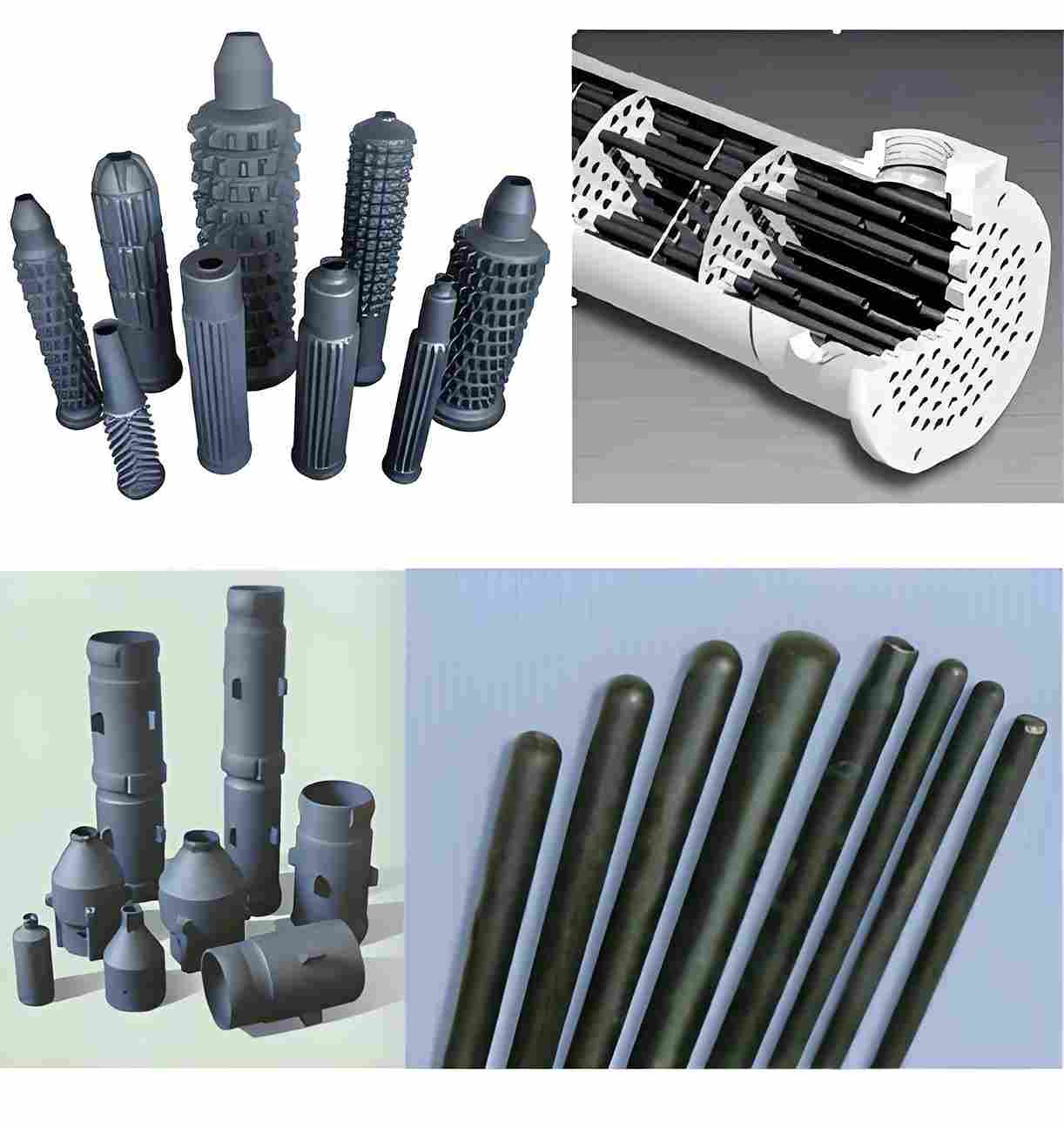
Silicon carbide (SiC) kiln furniture is built to handle high temperature, heavy loads, and repeated firing cycles. But even the best SiC shelves, beams, and props will warp, crack, or spall early if they are loaded incorrectly, supported poorly, or cycled too aggressively.
This guide explains how to maintain silicon carbide kiln furniture and prevent warping and damage, so you can get the maximum service life from your investment and keep your firing results stable.

What silicon carbide kiln furniture does in your kiln
In industrial kilns and furnaces, SiC kiln furniture typically includes:
- SiC plates and shelves used as load-bearing decks and setter plates
- SiC beams and batts supporting stacked loads across long spans
- SiC rollers in roller kilns for continuous firing lines
- SiC props and posts providing vertical support between levels
Products like Zirsec’s silicon carbide plates offer high strength, low creep, and good thermal shock resistance. However, their lifetime still depends heavily on how they are used and maintained day to day.
Typical failure modes in SiC kiln furniture
Most problems fall into a few recognizable patterns:
- Warping and bowing of shelves and beams under load
- Cracks from thermal shock or over-stressing
- Edge chipping and spalling from impact or poor handling
- Chemical attack from vapors, glazes, or fluxes
- Creep deformation at high temperature over long cycles
Preventing these issues is mostly about control: control of loading, support, temperature gradients, atmosphere, and handling practices.
1. Control loading to reduce warping
Warping is one of the most common complaints with SiC kiln shelves and beams. In most cases, the cause is simple: too much load, in the wrong place, at the wrong temperature.
Keep load within recommended limits
- Know the maximum load per shelf or beam at your firing temperature, not just at room temperature.
- For wide shelves, use multiple supports and avoid spanning large distances with heavy loads.
- When in doubt, derate allowable load in the hottest zones or for long soak times.
Distribute load evenly
- Place heavier items near the supports, not in the center of long spans.
- Avoid stacking tall, heavy loads on one side and light loads on the other; this creates uneven bending.
- For multi-layer stacks, align props vertically so loads are passed straight down, not through tilted columns.
Avoid local “hot spots” under heavy load
- Where flame or radiant heat is concentrated, reduce load or use additional supports.
- If certain shelves repeatedly warp, compare their position relative to burners or heating elements and adjust layout.
2. Use proper support patterns and stack design
SiC kiln furniture performs best when it is well supported, but not over-constrained.
Use three-point support where possible
- Three points define a plane and prevent rocking while avoiding over-constraint.
- For large shelves, use multiple three-point groups instead of many uneven props.
Align props and posts vertically
- Ensure posts line up from one level to the next so loads transfer straight down.
- Avoid “staggered” props unless the structure is designed for that; staggered supports introduce bending and twisting.
Use flat, clean bearing surfaces
- Keep contact points between shelves and props free of kiln wash lumps, glaze drips, or debris.
- Small high spots concentrate stress and can lead to cracking during thermal cycling.
3. Manage firing curves to prevent thermal shock
Silicon carbide handles thermal shock better than many traditional refractories, but it still has limits. Abrupt temperature changes across a thick shelf or beam will generate internal stress.
Control heat-up and cool-down rates
- Use moderate ramp rates, especially at low temperatures where temperature gradients are largest between surface and core.
- For thick or large-format plates, slow down through critical temperature ranges and avoid sudden changes in setpoint.
- Do not open kiln doors or hatches prematurely; cold air hitting hot furniture is a classic cause of cracking.
Reduce temperature gradients within the kiln
- Balance firing profiles so there are no zones that run significantly hotter or cooler than others at the same time.
- Check airflow, burner tuning, and element placement to reduce localized overheating.
4. Protect against chemical attack and vapors
Certain glazes, fluxes, and process vapors can slowly attack SiC, especially at the gas–solid interface. Over time this weakens surfaces and contributes to warping, spalling, or cracking.
Use kiln wash and setters wisely
- Apply compatible kiln wash to shelves where glazes or fluxes might drip, but avoid excessively thick or uneven layers.
- Use setters or sacrificial plates under aggressive products rather than placing them directly on primary shelves.
Monitor atmosphere and process chemistry
- Watch for corrosive vapors (e.g. alkali vapors from certain fuels or products) and adjust firing conditions where possible.
- If you see glassy, corrosive deposits forming on SiC surfaces, review product chemistry and firing profile.
5. Handling and storage practices that extend service life
A surprising amount of damage to SiC kiln furniture happens outside the kiln.
Handle like a structural component, not scrap
- Use two people or lifting aids for large shelves and beams; do not drag or drop them.
- Never knock shelves against each other or against steel structures to remove debris.
- Support pieces on multiple points when moving them, not on a single edge or corner.
Store flat and properly supported
- Store shelves on flat, level surfaces with supports spaced to mimic their in-kiln support pattern.
- Do not stack heavy piles of shelves with no props or spacers; the lower pieces may creep or warp under long-term load.
- Keep stored kiln furniture clean and protected from impact from forklifts or other equipment.
6. Cleaning without damaging SiC kiln furniture
Cleaning is necessary, but the wrong methods will shorten service life.
Use controlled mechanical cleaning
- Remove loose debris with soft tools (plastic or wood scrapers, non-metallic brushes) when possible.
- Limit use of hammers or steel chisels to unavoidable cases, and only at low angles to reduce chipping risk.
- Avoid high-pressure water blasting unless you understand its effect on surface roughness and microcracking.
Use firing cycles to burn off residues
- For some residues, a controlled burn-off cycle at moderate temperature can clean surfaces without aggressive mechanical action.
- Do not shock shelves with cold water or rapid quenching to remove spills.
7. Inspection routines and replacement decisions
Regular inspection lets you retire kiln furniture before it fails in the kiln and damages products or equipment.
What to inspect
- Flatness and warping: sight along the length of shelves and beams for bowing or twist.
- Cracks: check both faces, edges, and corners for visible cracks or craze patterns.
- Surface condition: look for deep pitting, glassy attack, or spalling.
- Support contact areas: inspect where shelves sit on props; small cracks often start here.
When to retire kiln furniture
- When shelves are visibly warped enough to affect product flatness or stacking stability.
- When cracks are through-thickness or clearly growing between firing cycles.
- When surface attack is severe enough to reduce cross-section or create weak spots.
- When the risk of failure outweighs the cost of replacement for the products being fired.
Linking maintenance to product selection
Good maintenance starts with selecting the right type and grade of SiC kiln furniture for your process. For example, using high-density plates such as silicon carbide plates with appropriate thickness and support spacing can greatly reduce warping under heavy loads.
In many plants, the most effective strategy is a combination of:
- Appropriate SiC grade and geometry for shelves, beams, and supports
- Disciplined loading and stacking practices
- Controlled firing curves and atmospheres
- Consistent handling, cleaning, and inspection routines
FAQ: Maintaining silicon carbide kiln furniture
1. How long should silicon carbide kiln shelves last?
Service life depends on temperature, load, cycle frequency, atmosphere, and handling. In well-controlled industrial kilns, SiC shelves often run significantly longer than traditional cordierite or mullite shelves. However, aggressive loading or firing schedules can shorten life dramatically.
2. Why are my SiC shelves warping even though they are rated for high temperature?
Shelf ratings assume proper support, even loading, and controlled firing curves. Warping usually indicates overloaded spans, poor support patterns, or temperatures higher than expected in local hot spots.
3. Can warped silicon carbide shelves be straightened?
In practice, no. Once SiC shelves or beams have warped under load at temperature, they rarely return to their original shape. Attempts to “reverse-bend” them often introduce cracks. The better approach is to prevent warping and replace pieces once distortion affects product quality.
4. Are hairline cracks always a reason to discard kiln furniture?
Not always. Superficial craze patterns can be acceptable if they are stable and shallow. However, any crack that goes through the thickness, reaches the edge, or grows between firings is a clear end-of-life indicator.
5. How can I tell if my loading pattern is too heavy?
Watch for progressive bowing over successive cycles and compare actual spans and loads to supplier guidance. If certain shelves or beams always warp first, calculate load per unit area or per span, and reduce it or add supports in those zones.
6. Does kiln wash help or hurt silicon carbide shelves?
Properly applied kiln wash can protect against glaze and flux attack, but thick, uneven wash layers create stress points and can flake off, leaving rough surfaces. Use only compatible wash, applied in thin, even coats where truly needed.
7. Can I mix SiC kiln furniture with other materials in the same kiln?
Yes, but be aware that different materials have different thermal expansion, strength, and creep behavior. Support and loading patterns should account for the weakest components in the system, not just the SiC parts.
8. What is the best way to clean glaze or slag from SiC shelves?
Use controlled mechanical removal with suitable tools and, where possible, use dedicated sacrificial setters under the most aggressive products. Avoid deep chiseling or thermal shocking with cold water.
9. How often should I inspect SiC kiln furniture?
At minimum, perform a visual inspection during every scheduled kiln maintenance shutdown. High-value or tight-tolerance products may justify brief inspections between cycles, especially when you suspect overloading or process changes.
10. How can a supplier help improve kiln furniture lifetime?
A knowledgeable supplier can recommend appropriate SiC grades, thicknesses, and support layouts based on your temperature, load, and firing schedule. Combined with disciplined maintenance practices, this often doubles effective lifetime compared to trial-and-error approaches.