Silicon carbide has gone from a niche ceramic to a serious option for pumps, furnaces, wear parts, and high-temperature equipment. But in many engineering teams, decisions are still influenced by outdated assumptions and half-truths.
This article breaks down common misconceptions about silicon carbide (SiC) and replaces them with practical facts, so you can decide when SiC is the right choice for your system.
Misconception 1: “Silicon carbide is too brittle for real industrial use”
Yes, silicon carbide is a ceramic, and like other ceramics it is brittle in tension. But that does not mean it is fragile or unsuitable for industrial duty.
The truth: Properly designed SiC components have high strength in compression, high stiffness, and excellent wear resistance. When they are:
- Correctly supported
- Loaded mainly in compression or gentle bending
- Free from sharp stress concentrators
… they provide long, stable service life in demanding environments where metals and traditional ceramics fail repeatedly.
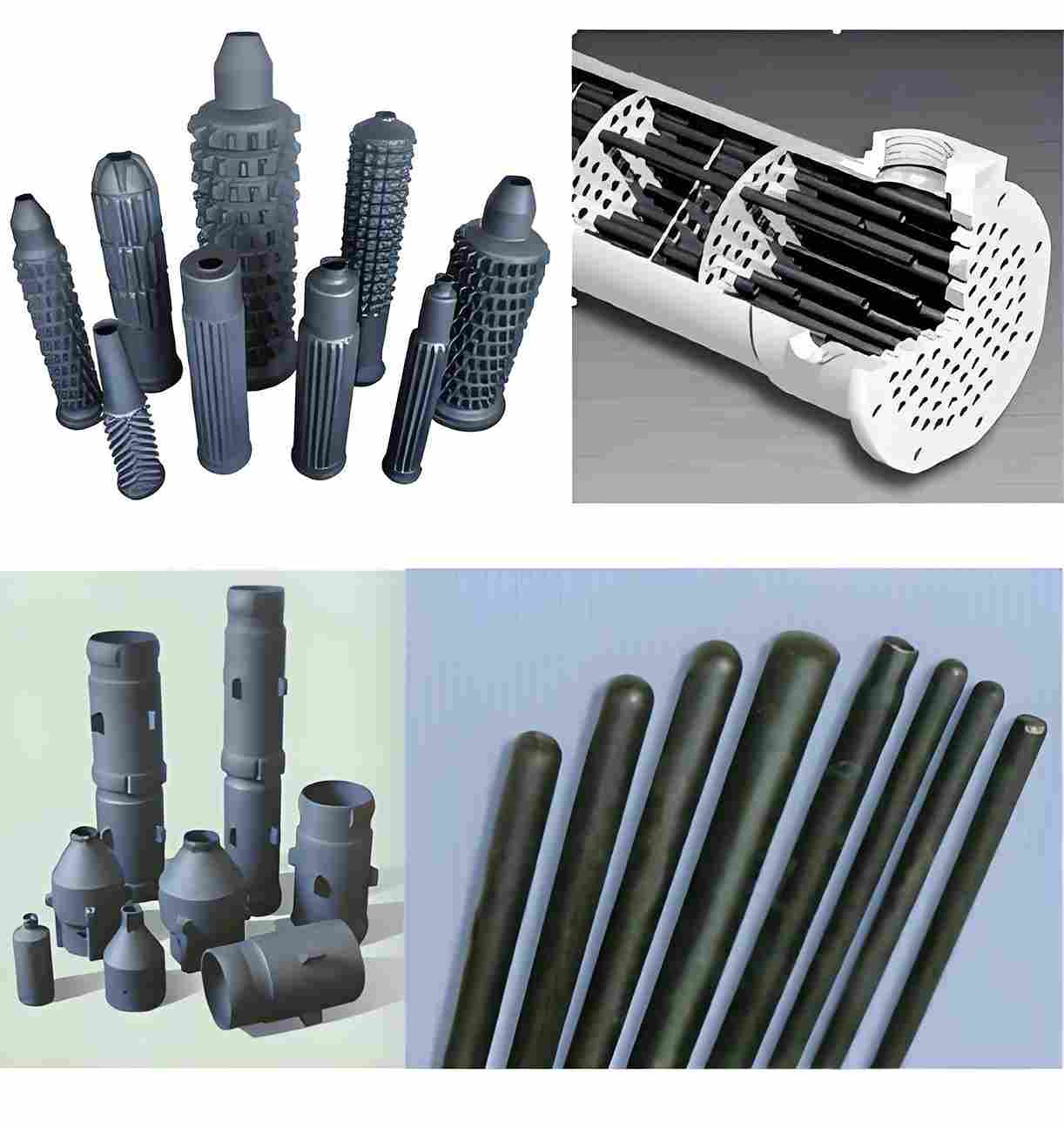
Mechanical seal rings, silicon carbide tubes, and kiln plates in furnaces are standard examples: all handle high loads and thermal cycling without “shattering” when engineered properly.
Misconception 2: “SiC is only for ultra-high-tech or semiconductor applications”
Silicon carbide shows up in semiconductor wafers and high-end electronics, which leads some people to assume it is only for cutting-edge industries.
The truth: While SiC is important in semiconductors, most industrial SiC ceramics go into very practical equipment such as:
- Chemical and slurry pumps (seal rings, sleeves, bearings)
- Furnace and kiln components (tubes, burners, plates, beams)
- Wear liners and nozzles in mining, cement, and flue gas systems
- Metal melting equipment, including silicon carbide crucibles
In many plants, silicon carbide is used simply because it survives abrasion, temperature, and corrosion better than the alternatives, not because the process is “high tech.”
Misconception 3: “Silicon carbide is always too expensive”
SiC ceramics usually cost more per part than basic metals or standard refractories, so they are often dismissed as “too expensive” before the numbers are actually checked.
The truth: Unit price is the wrong metric. What matters is total cost of ownership:
- How long does the part last before replacement?
- How often does its failure cause unplanned downtime?
- How much labour, rework, and scrap are tied to those failures?
In abrasive, corrosive, or high-temperature service, silicon carbide components often last 2–5 times longer than the materials they replace. Once you factor in downtime and maintenance, SiC frequently becomes the cheapest option per operating hour, even if the initial PO value is higher.
Misconception 4: “SiC can be machined like metal after sintering”
Some designers assume they can finalize geometry after sintering, as they would with steel or other metals.
The truth: Fully sintered silicon carbide is extremely hard. Post-sinter machining is done with diamond tools only and is:
- Slow
- Expensive
- Best reserved for critical surfaces and tight fits
Most of the geometry should be created before sintering through pressing, isostatic forming, extrusion, and green machining. The more you try to “fix the design later” with heavy grinding, the more cost and lead time you add.
Good practice is to identify truly critical tolerances (seal faces, bearing fits, mating diameters) and design the rest for manufacturability.
Misconception 5: “All silicon carbide ceramics are basically the same”
It is common to see “SiC ceramic” treated as a single material, regardless of grade or process route.
The truth: There are several main families of silicon carbide ceramics, including:
- Pressureless sintered SiC (SSiC): high density, excellent corrosion resistance, ideal for mechanical seals and high-purity parts.
- Reaction-bonded SiC (RBSiC / SiSiC): good for larger structural components such as beams, rollers, and burner tubes.
- Recrystallized SiC (RSIC): strong high-temperature and thermal shock performance for certain furnace applications.
Choosing “any” SiC grade without aligning it to temperature, medium, and load conditions is a shortcut to disappointing results. Correct grade selection is one of the biggest levers for success.
Misconception 6: “SiC can replace metal 1:1 without design changes”
Another frequent assumption is that you can simply take a metal part, copy the drawing, and make it in silicon carbide.
The truth: Ceramics and metals behave differently. A direct 1:1 substitution often leads to problems such as:
- Thin, unsupported sections that are prone to cracking
- Stress concentrations at sharp corners or thread roots
- Excessive tensile stress in areas originally designed for ductile metals
Successful SiC designs usually involve:
- Adjusted wall thickness and section transitions
- Generous radii and fillets at critical points
- Support and clamping layouts tailored to ceramic behaviour
Working with a supplier that understands ceramic design is more important than simply “changing the material” in a CAD model.
Misconception 7: “Silicon carbide can’t handle thermal shock”
Because ceramics are often associated with cracking under rapid temperature change, some engineers assume SiC is unsafe in thermal cycling.
The truth: Compared with many other ceramics, silicon carbide has:
- Low thermal expansion, reducing thermal stress
- Relatively high thermal conductivity for a ceramic, which helps smooth out temperature gradients
When geometry and mounting are correct, SiC tubes, plates, and kiln furniture can withstand aggressive cycling in furnaces and kilns. The failures usually come from:
- Extreme, uncontrolled quenching
- Severe mechanical restraint (fixed at both ends with no expansion allowance)
- Designs with high stress concentrations
Handle those correctly, and SiC’s thermal shock performance is one of its major strengths, not a weakness.
Misconception 8: “SiC is only for very high temperatures”
Silicon carbide’s high-temperature capability sometimes creates the impression that it is only justified in extreme heat.
The truth: SiC is also valuable at moderate temperatures when processes involve:
- Severe abrasion from solids or slurries
- Combined corrosion and erosion
- Demanding sealing or dimensional stability requirements
In many chemical pumps, for example, SiC mechanical seal rings and sleeves operate at modest temperatures but deliver far better life than metallic or graphite alternatives, simply because of their wear and corrosion resistance.
Misconception 9: “Standard catalog ceramics are good enough everywhere”
Some plants assume that if a catalog alumina or basic refractory survived in the past, that is the end of the story.
The truth: Traditional ceramics may be “good enough” for low-risk, low-cost areas, but they often perform poorly in:
- Critical pumps and valves where leaks are expensive
- Furnace zones with repeated cycling and high load
- Wear hotspots where liners fail long before scheduled shutdowns
In those locations, upgrading to engineered SiC components – such as silicon carbide plates, tubes, or seal rings – can unlock substantial gains in uptime and reliability that traditional materials cannot provide at any reasonable thickness.
Misconception 10: “If one SiC trial failed, silicon carbide doesn’t work”
Every plant has at least one story: a ceramic trial that cracked, leaked, or failed early. The conclusion is often, “We tried SiC. It doesn’t work here.”
The truth: A failed trial usually means one specific design, grade, or installation did not work – not that the entire material class is invalid. Common root causes include:
- Wrong SiC grade for the chemistry or temperature
- Direct 1:1 metal-to-ceramic substitution without design changes
- Poor mounting or restraint causing unintended tensile stress
- Inadequate handling, shipping damage, or improper start-up procedures
A structured second attempt, with better operating data and a revised design, often produces very different results.
How to use these “truths” in real projects
Instead of dismissing silicon carbide based on old assumptions, use these steps:
Identify chronic problem areas
- : seals, tubes, plates, or liners that fail too often due to wear, corrosion, or temperature.
Quantify the cost
- : downtime, labour, scrap, and lost production, not just part price.
Check whether SiC’s strengths match the failure mode
- : wear, heat, and corrosion together are a strong signal.
Work with a supplier on grade and geometry
- : SSiC vs RBSiC, wall thickness, radii, and mounting details matter.
Run a controlled trial
- and track performance over one maintenance cycle.
Summary
Silicon carbide ceramics are not magic, but they are also not the brittle, exotic, “only for semiconductors” material many still imagine. In reality, SiC is a practical, proven solution for industrial problems involving:
- Severe wear and abrasion
- High temperatures and thermal cycling
- Corrosive or erosive fluids
- Critical equipment where downtime is expensive
Clearing away the misconceptions allows engineers and buyers to use silicon carbide where it makes the most sense: not everywhere, but in the places where reliability and uptime matter most.