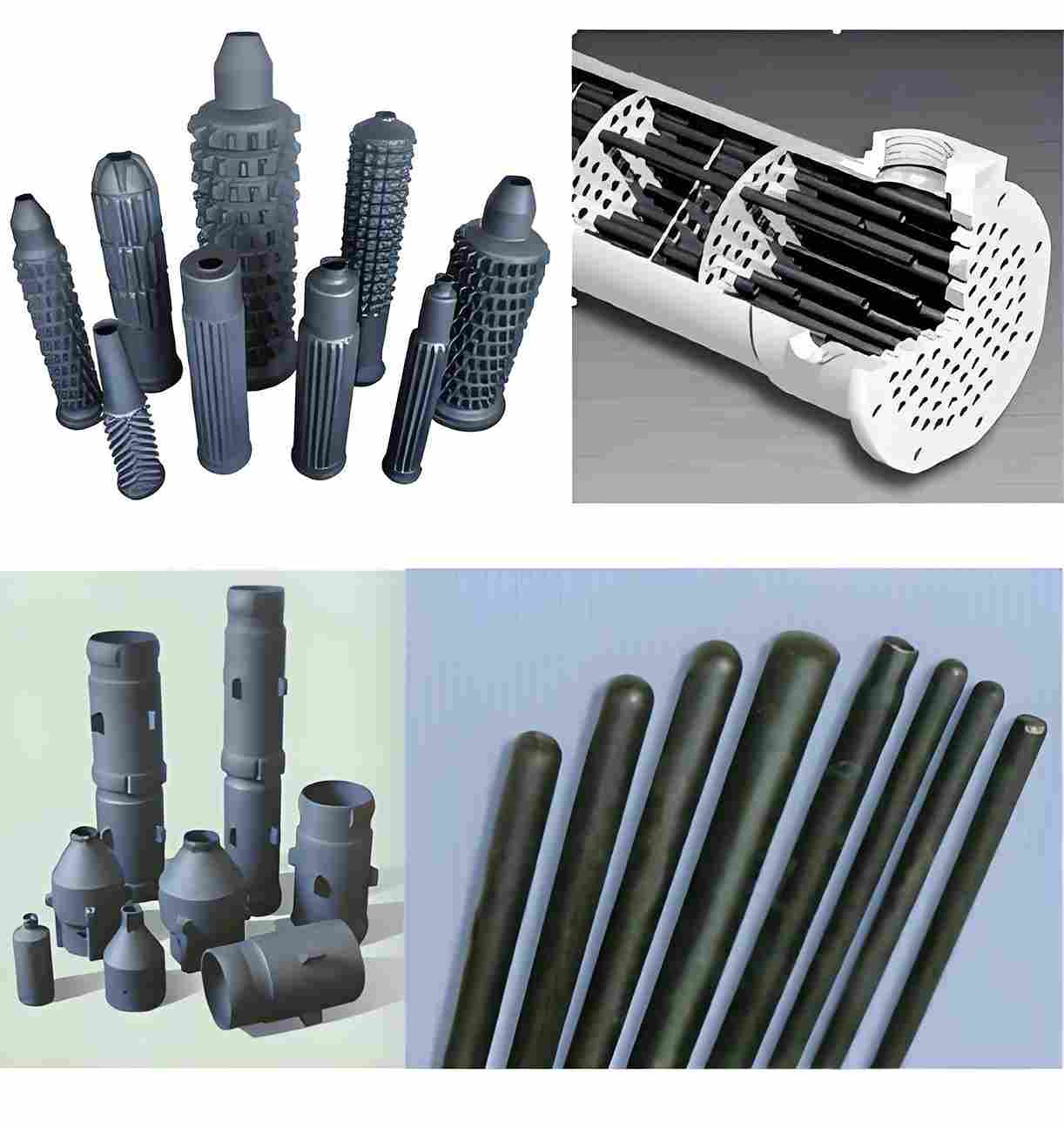
Silicon carbide ceramics can solve tough problems in pumps, furnaces, and process equipment – but only if they are designed correctly. Treat SiC like steel, copy a metal drawing 1:1, and you usually end up with cracks, mounting issues, or unnecessary cost.
This guide explains what designers need to know when working with silicon carbide (SiC): how its properties affect geometry, tolerances, mounting, and material choices, and how to avoid the classic mistakes that make ceramic projects fail.
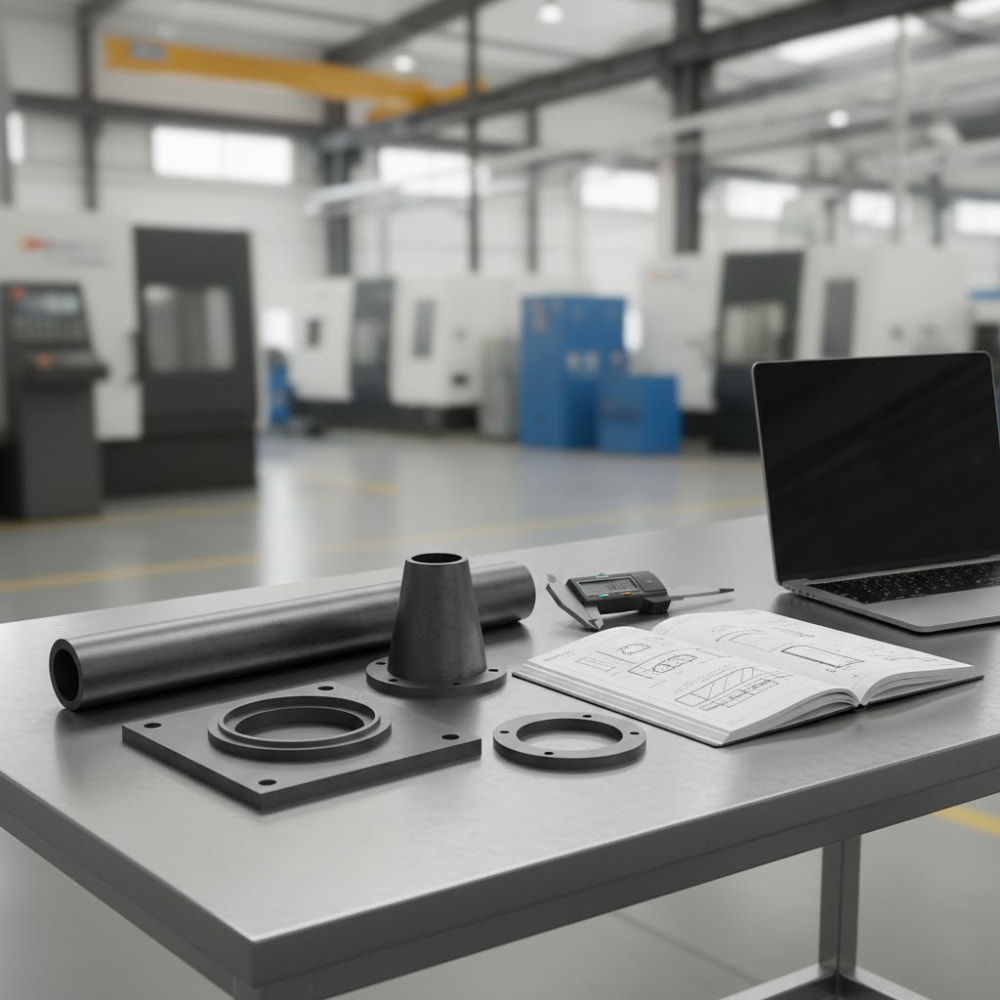
1. Start with the right expectations about silicon carbide
Silicon carbide is not “just another hard material.” It is a strong, stiff, and very wear-resistant ceramic that behaves differently from metals and traditional refractories.
- Great at: wear resistance, high-temperature strength, corrosion resistance, dimensional stability.
- Weak at: tension, impact, and abuse from misalignment or over-constraint.
Designing with SiC means you deliberately load it in compression and controlled bending, and avoid situations where tensile stress and shock dominate.
2. Choose the right SiC grade for the job
“SiC ceramic” is not a single material. For equipment design, you will usually work with three families:
Pressureless sintered SiC (SSiC)
- High density, low porosity, excellent chemical resistance.
- Best for mechanical seal rings, sleeves, bearings, precision components, and high-purity parts.
- Good choice when fluid is aggressive and tolerances are tight.
Reaction-bonded SiC (RBSiC / SiSiC)
- Strong structural material for larger or more complex parts.
- Common in tubes, beams, rollers, burner components, kiln furniture.
- Good balance of mechanical strength and shape capability.
Recrystallized SiC (RSIC)
- Excellent high-temperature and thermal shock performance.
- Used for certain extreme-temperature furnace and kiln internals.
As a rule of thumb:
- Rotating seals, pump internals, sleeves, precision parts → SSiC.
- Tubes, beams, plates, burner parts, kiln furniture → RBSiC or RSIC depending on temperature and shock.
3. Geometry: avoid treating SiC like steel
The fastest way to break silicon carbide is to reuse a metal design without changes. When designing in SiC, pay attention to geometry details.
Avoid sharp corners and stress concentrators
- Use generous fillets and radii on internal and external corners.
- Avoid notches, sudden section changes, and narrow necks between thick sections.
- Blend transitions smoothly where loads change direction or cross-section changes.
Control section thickness
- Very thin, long, unsupported sections are high risk in ceramics.
- For plates and kiln furniture, keep a reasonable thickness-to-span ratio so bending stresses stay low.
- For tubes, ensure wall thickness is sufficient to handle pressure and handling loads without being oversized.
Think in compression, not tension
- Design load paths so the ceramic is mostly in compression or low bending.
- Use external structures (metal housings, frames) to carry complex load cases.
- Where possible, use preloaded metal structures to “hold” the ceramic in compression.
4. Mounting and support: where many designs fail
Even a perfectly designed SiC component will fail if it is mounted like a steel part. Mounting strategy is just as important as material choice.
Allow for thermal expansion mismatch
- Silicon carbide and metals have different thermal expansion coefficients. At high temperature, rigid metal clamps can build up large tensile stresses in the ceramic.
- Use slotted, floating, or compliant mounts where possible so the ceramic can expand freely in critical directions.
- Consider split rings, spring elements, or differential clearance to avoid “locking” the component under heat.
Avoid three-point and hard-point clamping
- Point or line contacts can concentrate stress in brittle materials.
- Prefer distributed support surfaces with suitable contact areas.
- Design seats and supports to be flat, clean, and aligned, especially for plates and beams.
Think about handling loads, not just operating loads
- Long tubes, beams, and plates often fail during installation or transport, not in service.
- Include handling and installation instructions in the design (lift points, support locations, packing details).
5. Tolerances, surfaces, and cost control
Sintered SiC is extremely hard. After sintering, only diamond tools can machine it efficiently. This has a direct impact on how you should specify tolerances and finishes.
Distinguish critical vs non-critical dimensions
- Reserve tight tolerances for mating diameters, seal faces, bearing surfaces, and locating features.
- Use relaxed tolerances on non-critical surfaces and background geometry.
- Avoid using metal-style fits and tolerances “everywhere” just out of habit.
Specify realistic surface finishes
- Mechanical seal faces may need lapped finishes; other surfaces often do not.
- Grinding and lapping add cost; specify fine finishes only where they affect function.
Shrinkage and consistency
- Ceramics shrink during sintering, often 15–20% depending on process.
- Good suppliers compensate for shrinkage in tooling and process control, but ultra-tight profiles on very large parts can be difficult and expensive.
6. Designing common SiC components
Tubes and protection tubes
Silicon carbide tubes are widely used in furnaces, burners, and corrosive lines. When designing with tubes (for example, silicon carbide tubes), pay attention to:
- Wall thickness vs span: long spans with thin walls are more sensitive to bending and handling damage.
- Support spacing: define intermediate supports where necessary to reduce deflection.
- End connections: use sockets, flanges, or soft interfaces instead of direct metal clamp on the tube body.
Plates and kiln furniture
For plates, tiles, and kiln furniture, such as silicon carbide plates, design considerations include:
- Flatness vs thickness: very thin plates with strict flatness under load and heat may be unrealistic; balance thickness and span.
- Support pattern: use multiple supports with known locations to control bending.
- Load distribution: avoid point loads on the plate surface; spread loads using setters or secondary supports.
Mechanical seal rings and sleeves
- Define face flatness, run-out, and surface finish appropriate for your sealing technology.
- Include chamfers and lead-ins to reduce chipping during assembly.
- Ensure the seal housing or gland design does not over-constrain the SiC ring, especially under temperature swings.
7. Thermal analysis and design verification
For demanding applications, you should treat silicon carbide components like any other critical structural part and verify the design.
- Use basic hand calculations to estimate bending stresses and safety factors.
- For complex parts, consider finite element analysis (FEA) with appropriate material properties at operating temperature.
- Evaluate thermal gradients and constraint to identify zones of tensile stress in the ceramic.
Combine this with real process data: true operating temperatures, start-up/shutdown procedures, and upset conditions, not just nominal design values.
8. Collaborating with your SiC supplier
Designing with silicon carbide is easiest when you treat the supplier as part of the engineering process, not just a source of parts.
- Share load cases, temperatures, media, and cycle expectations, not just a drawing.
- Ask which features are best formed in the green state and which can be finished after sintering.
- Use supplier feedback to simplify geometry, adjust wall thickness, and choose between SSiC, RBSiC, or RSIC.
- Clarify inspection and documentation requirements early (dimensional reports, material certificates, leak tests, etc.).
9. Practical checklist for designers working with SiC
When you design or convert a part to silicon carbide, run through this checklist:
- Function & failure mode: What problem are you solving – wear, corrosion, temperature, or a combination?
- Grade selection: SSiC for seals/precision parts, RBSiC or RSIC for structural furnace components.
- Geometry: Are wall thickness, fillets, and transitions suitable for a brittle, high-strength ceramic?
- Mounting & support: Can the part expand, move, and settle without being locked into tension?
- Tolerances: Are critical dimensions clearly identified, and non-critical ones relaxed to save cost?
- Thermal behaviour: Are temperature cycles and gradients considered in the design?
- Handling: Has packaging, installation, and maintenance handling been thought through?
- Supplier input: Has the design been reviewed for manufacturability and risk by an SiC specialist?
Conclusion
Silicon carbide ceramics can significantly improve reliability and lifetime in harsh industrial environments, but they are not drop-in replacements for metals or basic refractories. To get the benefits, designers must:
- Respect SiC’s strengths and limitations.
- Design geometry and mounting for compression, not tension.
- Specify tolerances and surfaces intelligently, not by habit.
- Work closely with a supplier who understands ceramic processing.
When you apply these principles, silicon carbide components – tubes, plates, seals, and custom parts – stop being “risky experiments” and become reliable, high-performance building blocks in your equipment designs.