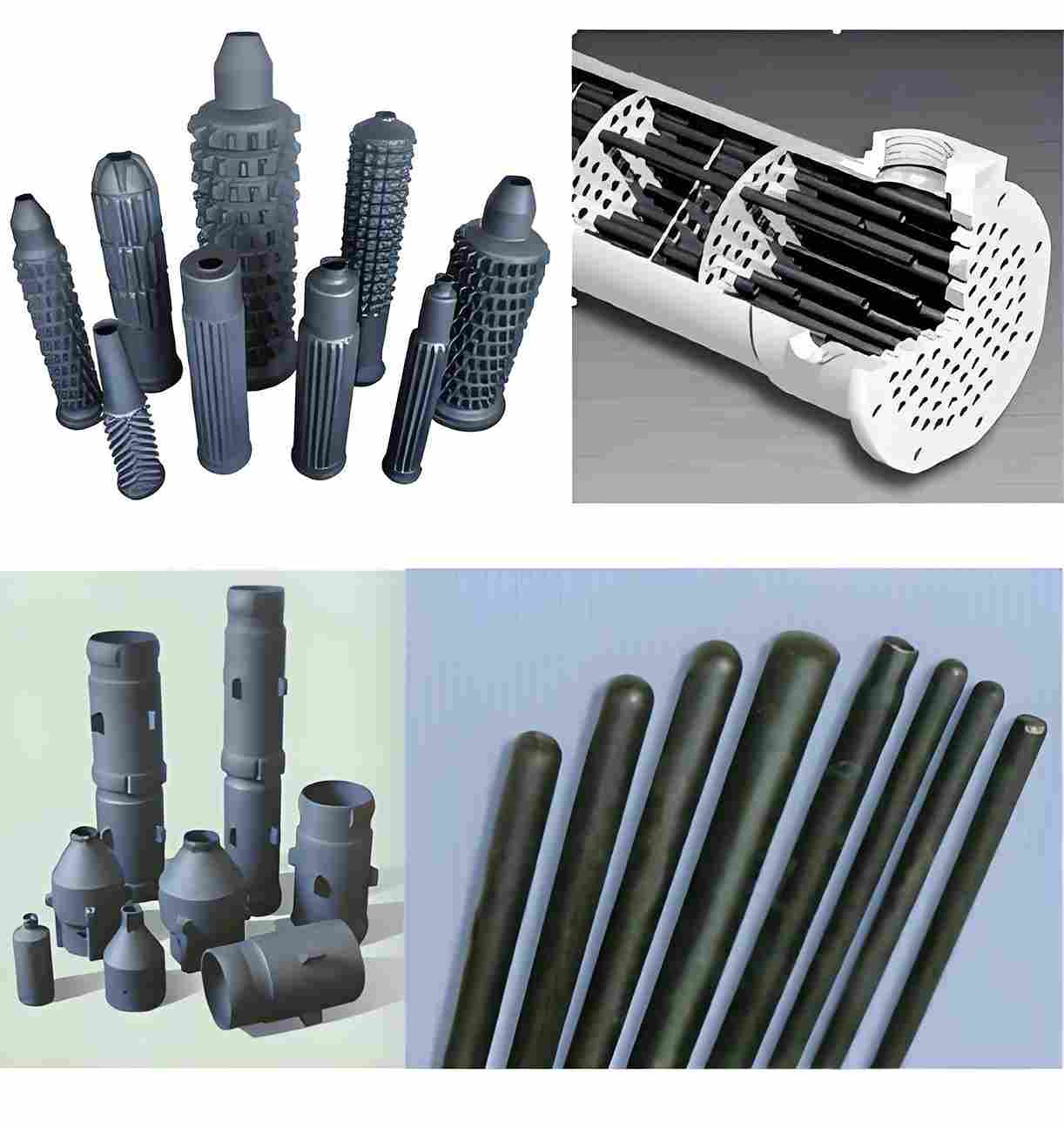
Silicon carbide ceramic outperforms tungsten carbide in high‑temperature stability, chemical resistance, and long‑term wear life for most demanding industrial environments, while tungsten carbide still holds an edge in pure hardness and certain cutting tools.
Quick Summary (FAQ)
- Which material survives 1500 °C better?
- Silicon carbide ceramic retains strength and dimensional stability well above 1500 °C; tungsten carbide begins to lose hardness around 1100 °C.
- What’s the cost ratio?
- Typically SiC ceramic is 1.5–2× the price of raw tungsten carbide powder, but lower machining and longer service life can make the total cost comparable.
- Can SiC be customized?
- Yes. ZIRSEC offers standard‑size inventory and full‑custom machining from drawings or samples.
- Which material is best for corrosive acids?
- Silicon carbide ceramic resists most acids, alkalis, and molten salts; tungsten carbide corrodes in strong acids unless protected.
1. Material Overview
Both silicon carbide (SiC) ceramic and tungsten carbide (WC) are classified as advanced hard materials, but their microstructures differ dramatically. SiC is a covalent ceramic composed of silicon and carbon atoms arranged in a hexagonal lattice, giving it high thermal conductivity and excellent oxidation resistance. WC is a metallic carbide, a composite of tungsten grains bound by cobalt or nickel, which provides extreme hardness at the cost of lower oxidation resistance.
2. Physical & Mechanical Properties
| Property | Silicon Carbide Ceramic | Tungsten Carbide |
|---|---|---|
| Density (g/cm³) | 3.15‑3.22 | 15.6‑15.8 (with Co binder) |
| Vickers Hardness | 2000‑2500 HV | 1500‑2000 HV |
| Flexural Strength | 250‑350 MPa | 130‑200 MPa |
| Fracture Toughness (KIC) | 3‑4 MPa·m½ | 9‑12 MPa·m½ |
| Thermal Conductivity | 120‑200 W/m·K | 70‑100 W/m·K |
| Coefficient of Thermal Expansion | 4‑5 × 10⁻⁶ /K | 4.5‑5.5 × 10⁻⁶ /K |
The table shows that SiC is lighter, conducts heat better, and holds higher flexural strength, while WC offers higher fracture toughness – a factor in impact‑loaded tools.
3. Thermal Performance
SiC ceramic retains >85 % of its room‑temperature strength at 1500 °C and does not undergo oxidative degradation until >1800 °C. In contrast, WC begins to oxidize rapidly above 600 °C, losing up to 30 % of its hardness by 1100 °C. For furnace tubes, kiln liners, and high‑temperature burners, SiC is the only practical choice.
4. Chemical Resistance
Silicon carbide is inert to most acids, alkalis, and molten salts. It survives exposure to hydrofluoric, sulfuric, and phosphoric acids without measurable loss of integrity. Tungsten carbide, however, can suffer pitting in strong chlorine‑containing acids unless a protective coating is applied.
5. Wear & Abrasion
Both materials are extremely hard, but wear mechanisms differ. SiC’s low friction coefficient (0.3‑0.5) and high thermal conductivity keep contact temperatures low, extending service life in slurry‑bearing pumps and grinding media. WC excels in dry abrasive conditions such as metal cutting inserts, where its superior fracture toughness prevents chipping.
6. Machinability & Cost Considerations
Machining SiC requires diamond tooling, coolant, and slower feed rates, raising tooling costs by 20‑30 %. WC can be ground with conventional carbide tools, but the cobalt binder adds health concerns during grinding. Raw material cost: high‑purity SiC powder ranges $30‑$70 kg, whereas WC powder with Co binder is $20‑$35 kg. The overall cost balance therefore depends on part geometry, required tolerances, and expected service life.
7. Application Comparison by Industry
7.1 Chemical & Petrochemical Equipment
Sealing rings, pump shafts, and reactor liners demand corrosion resistance and thermal stability; SiC ceramic seals are the standard. WC parts would corrode quickly and cause downtime.
7.2 Metallurgical & Steelmaking Furnaces
Furnace tubes and crucibles operate at 1400‑1600 °C. SiC ceramics survive repeated thermal cycles without cracking. WC cannot be used at these temperatures.
7.3 Power Generation & Renewable Energy
Heat exchangers and burner nozzles for gas turbines benefit from SiC’s high thermal conductivity and oxidation resistance. WC is restricted to low‑temperature turbomachinery bearings.
7.4 Cutting Tools & Machining
High‑speed steel replacement, metal‑working inserts, and drilling bits rely on WC’s exceptional hardness and toughness. SiC would fracture under the impact loads of chip removal.
7.5 Wear‑Resistant Liners & Conveyors
Materials handling chutes and crusher liners see abrasive solids; SiC plates and rollers extend service intervals by 40‑60 % compared with hardened steel.
8. How to Choose the Right Material
- Temperature ceiling: >1300 °C → SiC; < 1100 °C → WC possible.
- Chemical environment: Strong acids or molten salts → SiC.
- Load type: High impact or shock → WC; steady compressive or thermal load → SiC.
- Precision requirement: Tight tolerances (±0.1 mm) are easier to achieve with SiC because of its dimensional stability.
- Lifecycle cost: Calculate total cost of ownership. SiC’s longer life often offsets higher upfront price.
9. ZIRSEC’s Silicon Carbide Solutions
With 20 years of production experience, ZIRSEC provides a full portfolio of SiC ceramic components that fit the scenarios described above. Our capabilities include:
- Standard‑size inventory of SiC tubes, plates, rollers, and seal rings ready for 24‑hour shipment.
- Custom machining from CAD drawings or physical samples, tolerances down to ±0.1 mm for critical dimensions.
- Complete engineering support – from material selection to thermal‑stress analysis – delivered by dedicated product engineers.
- Transparent quality documents (COA, MSDS, inspection reports) for smooth customs clearance.
- Small‑batch production (minimum 10–20 pieces) with fast‑track tooling to meet urgent project timelines.
Explore our SiC ceramic tubes and discover how a single supplier can cover both standard and bespoke requirements while keeping lead times short.
10. Frequently Asked Questions
- Can SiC be brazed or welded?
- SiC can be brazed with active filler metals (e.g., Ti‑Cu alloys) at 800‑900 °C. Conventional welding is not applicable.
- What is the typical lifespan of a SiC seal ring in a pump handling acidic slurry?
- Field data show 5‑7 years of uninterrupted service, compared with 1‑2 years for metal‑based seals.
- Is tungsten carbide recyclable?
- Yes, WC can be reclaimed from worn tools, but the process is costly and often less economical than simply replacing the part.
- How does ZIRSEC guarantee dimensional stability after firing?
- Our sintering cycle is tightly controlled (±2 °C) and we perform post‑sintering CNC inspection to confirm each batch meets the specified tolerance.
- Do I need special handling for SiC during transport?
- Standard packaging (wooden crates with foam inserts) protects against mechanical shock; no hazardous‑material regulations apply.
11. Take the Next Step
If your application demands high‑temperature endurance, chemical resistance, and low‑maintenance wear performance, silicon carbide ceramic is the clear winner. Contact ZIRSEC today at info@zirsec.com or request a free engineering quote via our website. Our team will review your drawings, suggest the optimal SiC grade, and provide a detailed lead‑time schedule.