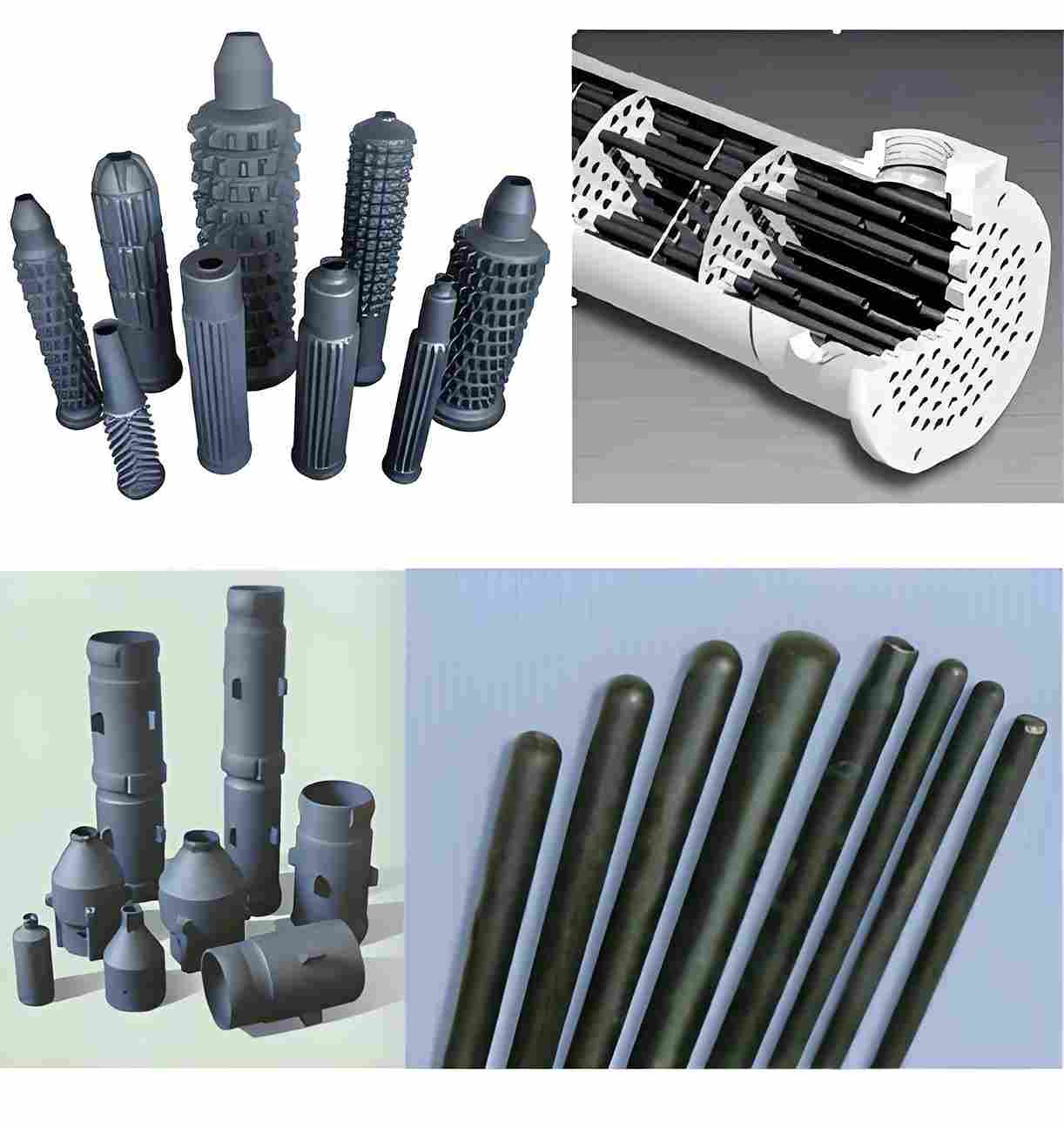
Choosing the right silicon carbide (SiC) grade is the first step to avoid costly downtime, premature wear, or safety incidents in high‑temperature and corrosive environments.
Quick Summary – FAQ
- What defines a SiC grade? Purity, density, grain size, and surface finish.
- Which grade suits temperatures above 1500 °C? High‑density (>3.20 g/cm³) and fine‑grain (>99.8% purity) grades.
- How does cost relate to performance? Higher density and tighter tolerances raise price but extend service life dramatically.
- Where can I get reliable custom SiC parts? ZIRSEC offers in‑house engineering, rapid prototyping, and 24‑hour stock delivery.
1. Why the Grade Matters
In practice, a “SiC part” can behave like a fragile glass or a long‑lasting furnace liner depending on its grade. Engineers often mistake the term “standard SiC” for a one‑size‑fits‑all solution, only to discover broken seal rings, cracked tubes, or excessive wear after a few weeks of operation. The hidden variables are:
- Purity (SiC %) – Impurities such as free silicon or carbon affect oxidation resistance.
- Bulk density (g/cm³) – Determines thermal shock capability and mechanical strength.
- Grain size (µm) – Fine grains improve hardness but may reduce machinability.
- Surface roughness (Ra µm) – Critical for seal rings and fluid‑contact components.
2. Decoding the Standard SiC Grade Nomenclature
Most manufacturers label grades with a letter‑digit code (e.g., “A‑104”). The code usually reflects four criteria:
2.1 Purity Level
Typical ranges:
- Grade A: 98–99% SiC – acceptable for low‑stress, low‑temperature (<900 °C) applications.
- Grade B: 99–99.5% – used for moderate‑temperature (900‑1300 °C) and medium wear.
- Grade C: ≥99.8% – required for aggressive oxidizing atmospheres and temperatures >1300 °C.
2.2 Density (Porosity)
Closed‑cell (low porosity) grades are 3.18‑3.22 g/cm³. Open‑cell grades (≈3.10 g/cm³) are cheaper but crack under thermal shock. For furnace tubes or burner nozzles, always request a density ≥3.18 g/cm³.
2.3 Grain Size Distribution
Typical classifications:
- Coarse (5‑10 µm) – easier to machine, suitable for large‑diameter tubes.
- Medium (2‑5 µm) – balanced hardness and workability.
- Fine (<2 µm) – highest hardness, best for wear‑critical seal rings.
2.4 Surface Finish
Polished (Ra ≤ 0.5 µm) grades are reserved for fluid‑seal applications; rough (Ra ≥ 2 µm) grades are fine for structural supports where clearance is generous.
3. Mapping Application Requirements to Grade Parameters
Below is a decision matrix that aligns the most common industrial use‑cases with the minimum grade specifications.
| Application | Temperature (°C) | Mechanical Stress | Corrosive Media | Recommended Grade |
|---|---|---|---|---|
| High‑temp furnace tube | >1500 | High | Oxidizing gases | Grade C, density ≥ 3.20, fine grain |
| Pump seal ring (chemical plant) | 800‑1200 | Medium | Acidic/alkaline fluids | Grade B‑C, polished surface, density ≥ 3.18 |
| SiC burner nozzle | 1400‑1600 | Thermal shock | Combustion gases | Grade C, density ≥ 3.19, fine grain |
| Wear plate for ore crusher | 400‑600 | Very high | Abrasion | Grade B‑C, coarse grain, open‑cell acceptable |
4. Cost vs. Performance – When to Pay Premium
Pricing follows a predictable curve:
- Standard Grade A – $10‑30 per kilogram.
- Grade B – $30‑80 per kilogram.
- Grade C – $80‑200 per kilogram (depending on tolerance).
Investing in a higher grade typically reduces replacement cycles by 3‑5×. For a $15,000 production line downtime, a $2,000 extra material cost is justified.
5. How ZIRSEC Helps You Pick the Perfect Grade
Our 20‑year track record in SiC manufacturing means we can translate your engineering drawing into a concrete grade recommendation within 48 hours.
5.1 Engineering Consultation
Send us the process temperature, pressure, and media composition. Our senior material engineers evaluate the four grade dimensions and return a grade matrix with cost impact.
5.2 Rapid Prototyping
We produce a 5‑piece sample batch (often from existing inventory) for in‑situ testing. Most clients report fit‑and‑function validation within two weeks.
5.3 Stock Availability & 24‑Hour Dispatch
Standard sizes such as 20 mm × 1500 mm furnace tubes or 30 mm × 30 mm seal rings are kept in a climate‑controlled warehouse. Silicon Carbide Tubes are shipped the same day after order confirmation.
5.4 Custom Tolerances
For projects requiring ±0.1 mm dimensional tolerance or Ra ≤ 0.5 µm finish, we employ CNC grinding and electro‑polishing. Our quality team issues a COA and full MSDS for every batch.
6. Real‑World Cases – Grade Selection in Action
6.1 European Pump‑Valve Manufacturer
Problem: Frequent fracture of 28 mm × 15 mm SiC seal rings at 950 °C in a chlorine‑rich stream. The supplier had been shipping Grade A material (≈98% purity, density 3.10 g/cm³).
Solution: ZIRSEC supplied Grade C (≥99.9% purity, density 3.20 g/cm³, fine‑grain). After a 3‑month trial, breakage dropped from 12% to <1%, saving the client $18,000 in downtime.
6.2 US‑based Solar‑Thermal Power Plant
Problem: Burner nozzles eroded after 800 hours of operation at 1550 °C.
Solution: Switched to a high‑density (3.21 g/cm³) fine‑grain Grade C nozzle with a polished surface. Lifetime extended to >5000 hours, cutting replacement cost by 85%.
7. Decision Flow – Choose Your SiC Grade in 5 Steps
- Define operating envelope: Max temperature, pressure, and chemical exposure.
- Identify mechanical load: Static load vs. cyclic stress.
- Select base grade: Use the matrix in Section 3.
- Check tolerance & finish: Determine required Ra and dimensional tolerance.
- Request quote & sample: Contact ZIRSEC with your drawing; we will confirm the final grade and delivery schedule.
8. Frequently Overlooked Factors
- Thermal expansion mismatch: SiC’s CTE (~4.5 × 10⁻⁶ /K) must be compatible with adjoining metal flanges to avoid seal failure.
- Oxidation protection: In environments above 1400 °C, a thin SiO₂ surface layer forms; however, impure grades accelerate spallation.
- Machining strategy: Coarse grains fracture less during CNC drilling; fine‑grain grades need low‑speed diamond tools.
- Storage humidity: Keep SiC parts in a dry environment (RH < 30%) to prevent surface carbonation.
9. Take the Next Step
If you are ready to eliminate guesswork and secure the longest‑lasting SiC component for your application, reach out to our technical sales team at info@zirsec.com. We will provide a free grade‑selection report, sample timeline, and a price quote tailored to your order volume.
Stop searching, stop risking un‑qualified material – let ZIRSEC deliver the exact SiC grade your process needs.